
Actinic Keratosis Treatment
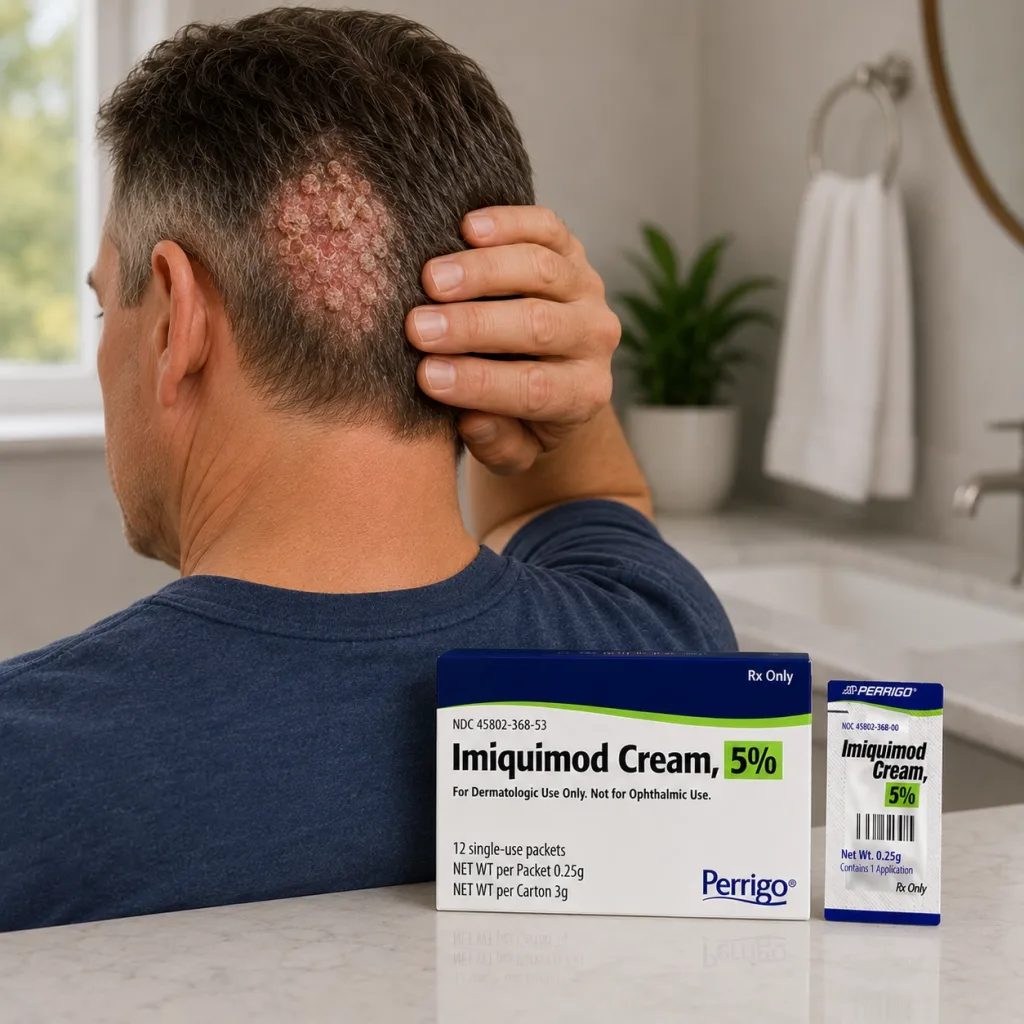
Commonly treated with Imiquimod 5% Cream & Diclofenac 3% Gel
Medication as Low as $55.00


How It Works
- Step 1Choose TreatmentSelect your treatment and quantity.
- Step 2Complete Health QuestionsAnswer a brief medical intake.
- Step 3Provider ReviewA licensed provider reviews your information.
- Step 4Pharmacy ShipsIf approved, your prescription is filled and shipped.
What patients say
“So far very easy to use and good explanation”
“I LOVE being able to order online prescriptions as needed.”
“I have used All Family Health many times and have never been disappointed. They offer great service and great products.”
“Professional and secure. Safe and efficient process. Thank you!”
“Great Pricing and a great product”
“My order was very easy. Thank you.”
“Very easy to navigate the site”
“Prompt, professional organization.”
“Everything was so simple to do,I can't not be more happy with your business 😁”
“I'm happy I was able to get what I was looking for”
Choose Your Treatment *
+ $30 provider review & $10 shipping only charged if approved
+ $30 provider review & $10 shipping only charged if approved
- Medication$55
- Provider review$30
- Shipping$10
- Total$95
Only charged if approved
Need another? Add more above — one $30 review + $10 shipping per order.
✓ In your cart
- Only charged if a provider approves your prescription
- Estimated delivery: Thu–Fri, Oct 22–23
See price breakdown
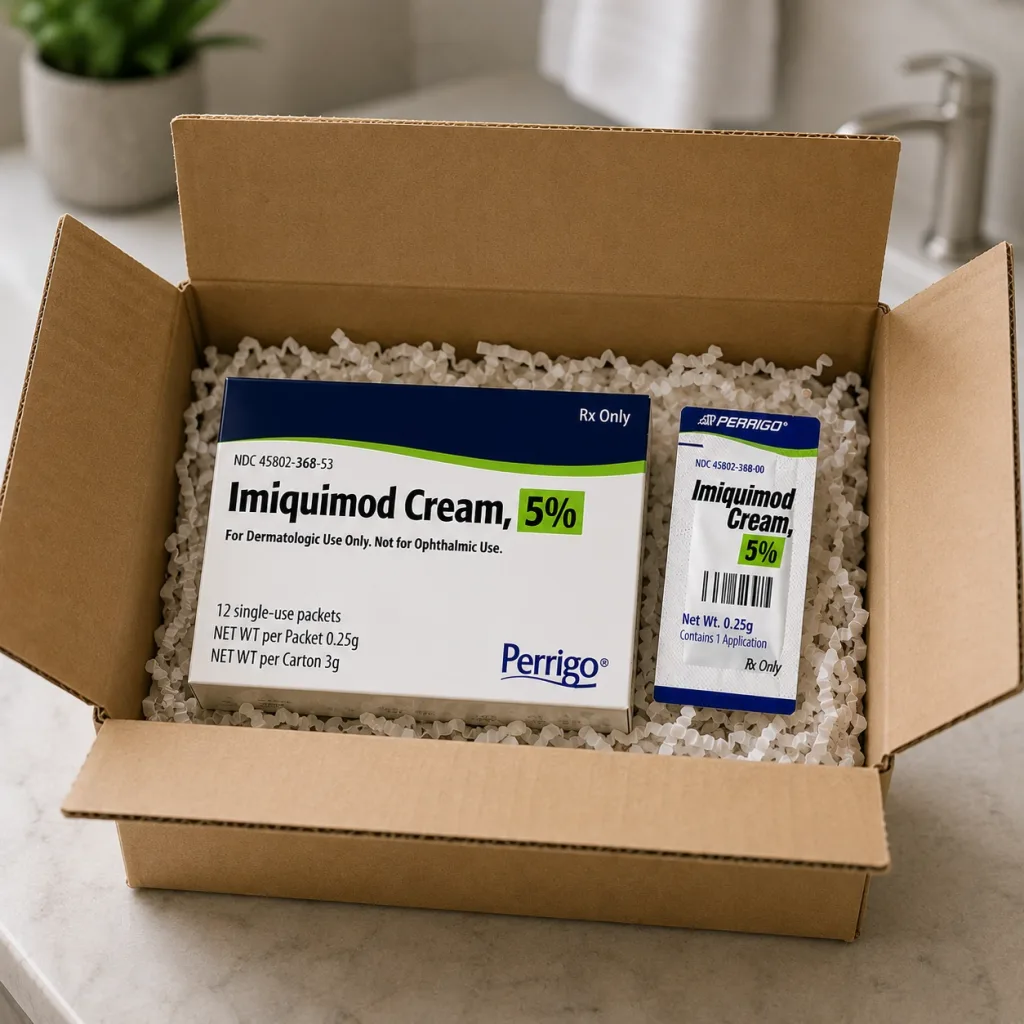
Estimated delivery: Thu–Fri, Oct 22–23 · discreet packaging
Refills at provider discretion.
How It Works
- Step 1Choose TreatmentSelect your treatment and quantity.
- Step 2Complete Health QuestionsAnswer a brief medical intake.
- Step 3Provider ReviewA licensed provider reviews your information.
- Step 4Pharmacy ShipsIf approved, your prescription is filled and shipped.
Choosing and Using Your Treatment
| Treatment | Choose this if… | How to Take |
|---|---|---|
| Imiquimod 5% Cream | For a defined area of actinic keratoses on the face or balding scalp in adults who can commit to a multi-week course. | Apply a thin layer to the treatment area 2 times per week at bedtime for 16 weeks. |
| Diclofenac 3% Gel | For adults who prefer a gentler, better-tolerated topical option with less skin irritation. | Apply to the affected area 2 times daily for 90 days. |
What is Actinic keratosis?
Also called: Actinic keratosis (AK); solar keratosis
Actinic keratosis, sometimes called solar keratosis, is one of the most common skin conditions treated in the United States. It develops after years of cumulative sun exposure, which is why it typically appears on the face, ears, scalp, neck, forearms, and backs of the hands. An AK often feels like a small patch of sandpaper and may be easier to feel than to see. Most actinic keratoses are harmless on their own, but they are classified as precancerous because a small number can turn into squamous cell carcinoma if left untreated. Because there is no reliable way to predict which spots will progress, dermatologists generally recommend treating them. Options include prescription creams and gels applied at home, as well as in-office procedures like cryotherapy (freezing).
Common symptoms
- A rough, dry, or scaly patch of skin, usually less than an inch across
- Flat to slightly raised bump that may feel like sandpaper
- Color ranging from pink or red to brown or skin-toned
- Itching, burning, stinging, or tenderness at the spot
- A hard, wart-like or thickened surface (hypertrophic actinic keratosis)
- Location on sun-exposed areas: face, ears, scalp, neck, hands, and forearms
- Spots that flake off but keep coming back in the same place
Causes & risk factors
- Long-term, cumulative exposure to ultraviolet (UV) light from the sun
- Use of tanning beds or sun lamps
- Fair skin, light-colored eyes, or hair that burns easily
- A history of frequent or severe sunburns
- Age over 40, since sun damage builds up over decades
- A weakened immune system (organ transplant, certain medications, or illness)
- Living in a sunny climate or working outdoors for many years
Treatment options for Actinic keratosis
Compare the medications offered on this page. Your provider will choose the right one for you based on your answers.
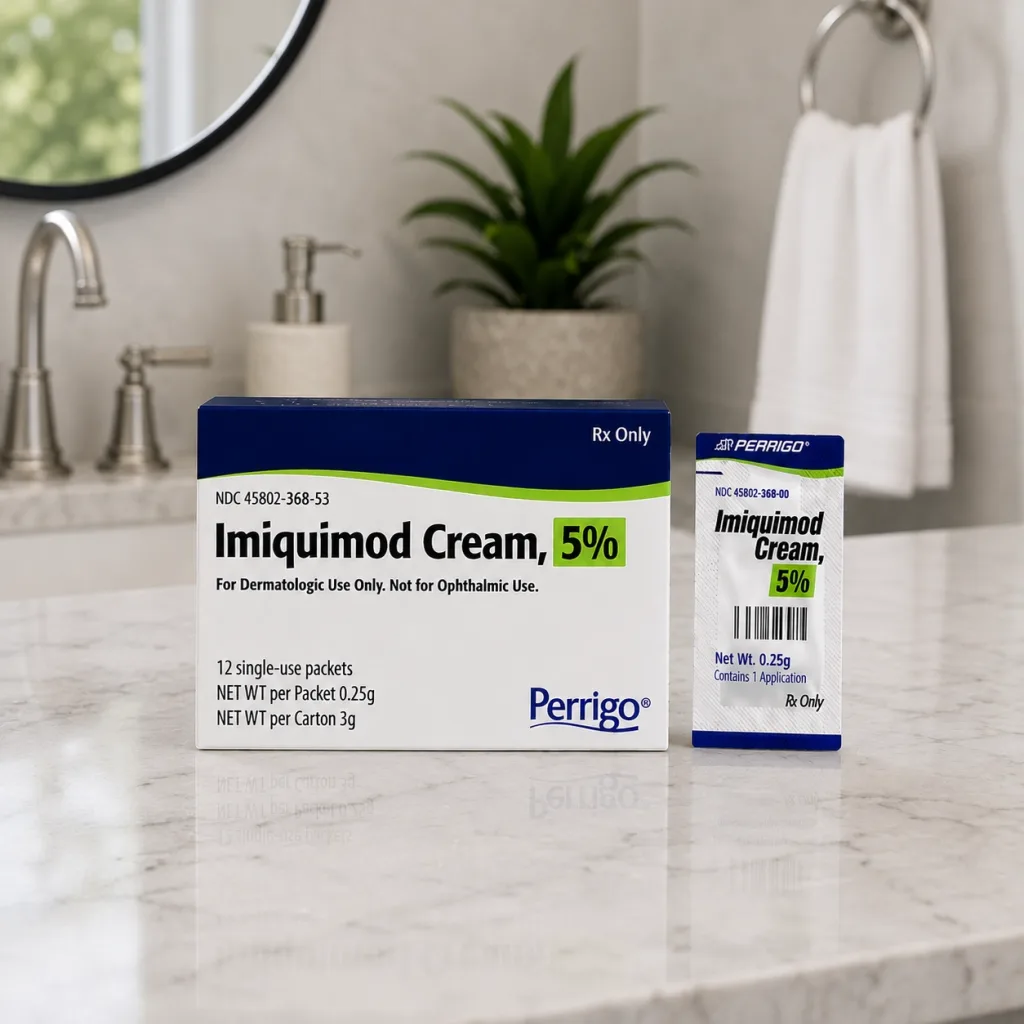
Imiquimod 5% Cream
from $55Topical immune response modifier
- Good choice if
- For a defined area of actinic keratoses on the face or balding scalp in adults who can commit to a multi-week course.
- How it works
- Works by stimulating the body's local immune response in the skin rather than acting on cells directly.
- Typical dosing
- Apply a thin layer to the treatment area 2 times per week at bedtime for 16 weeks.
Diclofenac 3% Gel
from $60Topical NSAID
- Good choice if
- For adults who prefer a gentler, better-tolerated topical option with less skin irritation.
- Typical dosing
- Apply to the affected area 2 times daily for 90 days.
Prices are for the medication only. Provider review and shipping are shown at checkout.
When to see a doctor in person
Online treatment is a reasonable fit if you have already been diagnosed with actinic keratosis and need a prescription topical therapy, or if you have a small number of stable, typical-appearing rough patches on sun-exposed skin. However, you should be seen in person if a spot is growing quickly, bleeding, developing a raised or hardened border, becoming painful, ulcerating, or failing to respond to treatment — these can be signs of squamous cell carcinoma, which requires a biopsy to diagnose. New or numerous lesions, spots on the lips (actinic cheilitis), or a history of skin cancer also warrant an in-person dermatology evaluation. Actinic keratosis is not a medical emergency, but changes suspicious for skin cancer should never be treated based on photos alone.
Prevention & self-care
- Apply broad-spectrum sunscreen SPF 30 or higher daily, even on cloudy days
- Wear protective clothing, wide-brimmed hats, and UV-blocking sunglasses
- Limit time in the sun between 10 a.m. and 4 p.m. when UV rays are strongest
- Avoid tanning beds and sun lamps entirely
- Reapply sunscreen every two hours and after swimming or sweating
- Check your skin regularly for new or changing spots
- See a dermatologist for periodic full-body skin exams, especially if you have a history of sun damage
Actinic keratosis FAQ
What is actinic keratosis?
Actinic keratosis is a rough, scaly patch of skin caused by years of sun exposure. It is considered a precancerous growth because a small percentage of these spots can develop into squamous cell skin cancer over time. It most often appears on the face, scalp, ears, neck, hands, and forearms.
Is actinic keratosis cancer?
No, actinic keratosis is not cancer, but it is precancerous. An estimated small percentage of untreated AKs progress to squamous cell carcinoma, a treatable form of skin cancer. Because it's impossible to predict which spots will progress, most clinicians recommend treating them.
Does actinic keratosis itch?
It can. Some actinic keratoses itch, burn, sting, or feel tender to the touch, while others cause no sensation at all. A spot that becomes increasingly painful or starts bleeding should be examined in person.
Does actinic keratosis go away?
Some actinic keratoses fade on their own, especially with strict sun protection, but many persist or return in the same spot. Because a small number can progress to skin cancer, treatment is generally recommended rather than watchful waiting alone.
When should I worry about actinic keratosis?
See a doctor promptly if a spot grows quickly, thickens, bleeds, becomes painful, develops a hard nodule, or does not respond to treatment. These changes can signal progression to squamous cell carcinoma, which needs a biopsy to confirm. People with weakened immune systems should have any new lesion evaluated in person.
What is the best cream for actinic keratosis?
Common prescription topicals include fluorouracil, imiquimod, and diclofenac gel. The best choice depends on the number and location of lesions, your skin's tolerance for irritation, and how long a treatment course you can commit to. A licensed provider can recommend the most appropriate option for your situation.
How to remove actinic keratosis at home?
Do not try to cut, scrape, freeze, or burn off an actinic keratosis yourself — this can cause scarring and infection, and it prevents proper evaluation of the lesion. Safe at-home treatment means using a prescription cream or gel exactly as directed by a provider. In-office options like cryotherapy are also available through a dermatologist.
What is the difference between actinic keratosis and seborrheic keratosis?
Actinic keratosis is a flat, rough, sandpaper-like patch caused by sun damage and is considered precancerous. Seborrheic keratosis is a raised, waxy, 'stuck-on' looking growth that is benign and not related to sun exposure. Because they can look similar, a clinician should confirm the diagnosis if you are unsure.
Actinic Keratosis vs. Seborrheic Keratosis
These two conditions are often confused because of their similar names, but they are very different. Actinic keratosis is precancerous and caused by sun damage; seborrheic keratosis is benign and not linked to UV exposure.
| Feature | Actinic Keratosis | Seborrheic Keratosis |
|---|---|---|
| Texture | Flat, rough, sandpaper-like | Raised, waxy, "stuck-on" appearance |
| Cause | Cumulative sun (UV) damage | Unrelated to sun; often runs in families |
| Location | Sun-exposed skin: face, scalp, hands, forearms | Anywhere, including chest and back |
| Cancer risk | Precancerous — treatment recommended | Benign — treatment optional |
What to Expect During Topical Treatment
Prescription creams and gels for actinic keratosis work by triggering the body to clear abnormal skin cells, so temporary redness, crusting, flaking, or irritation in the treated area is expected and often a sign the medication is working. Reactions are usually more noticeable with imiquimod and milder with diclofenac gel.
- Skin often looks worse before it looks better during the treatment course.
- Strict sun protection during and after treatment helps healing and reduces new lesions.
- Thick or wart-like spots (hypertrophic actinic keratosis) may respond less well to creams and are often treated in office with cryotherapy or a biopsy.
- A follow-up skin check after treatment confirms the lesions have cleared.