
Asthma Inhalers & Medications
Commonly treated with Albuterol, Fluticasone/Salmeterol & Montelukast
Medication as Low as $20.00


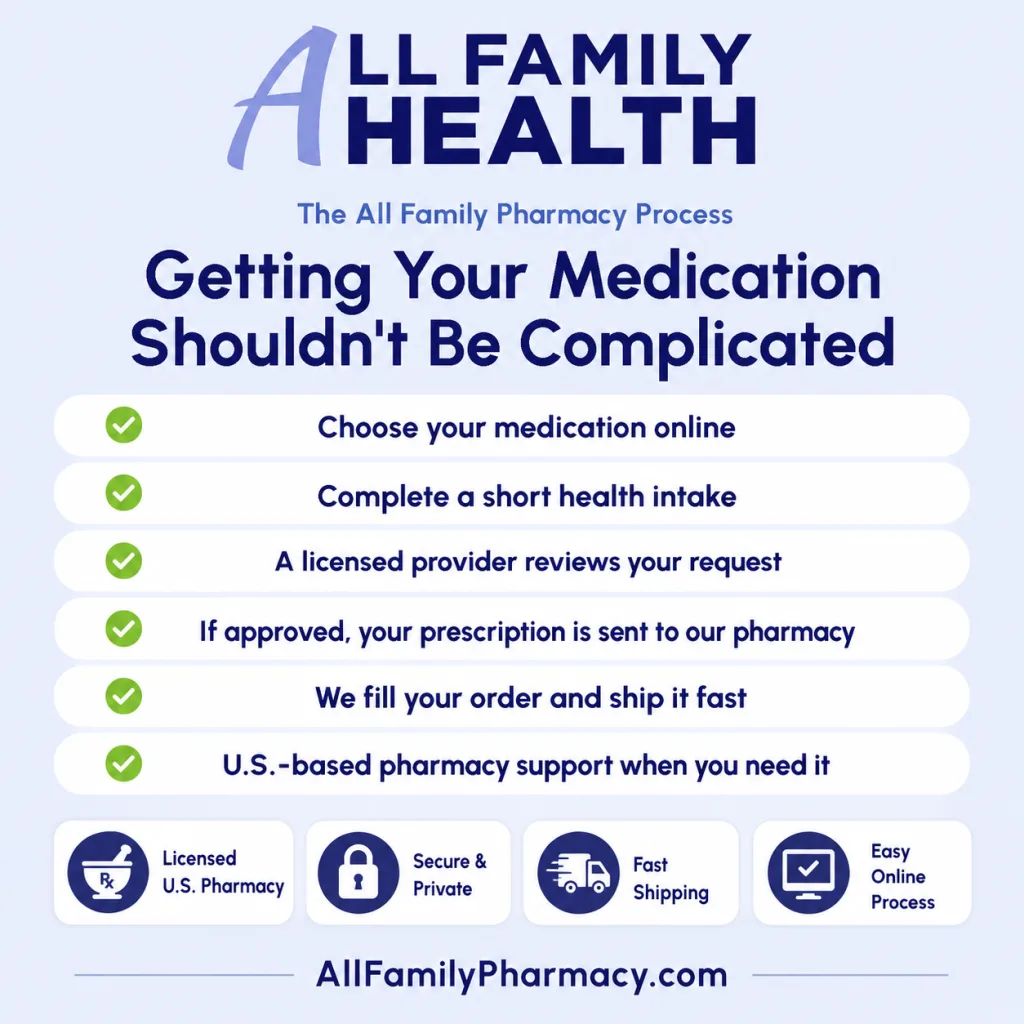
How It Works
- Step 1Choose TreatmentSelect your treatment and quantity.
- Step 2Complete Health QuestionsAnswer a brief medical intake.
- Step 3Provider ReviewA licensed provider reviews your information.
- Step 4Pharmacy ShipsIf approved, your prescription is filled and shipped.
What patients say
“So far very easy to use and good explanation”
“I LOVE being able to order online prescriptions as needed.”
“I have used All Family Health many times and have never been disappointed. They offer great service and great products.”
“Professional and secure. Safe and efficient process. Thank you!”
“Great Pricing and a great product”
“My order was very easy. Thank you.”
“Very easy to navigate the site”
“Prompt, professional organization.”
“Everything was so simple to do,I can't not be more happy with your business 😁”
“I'm happy I was able to get what I was looking for”
Choose Your Treatment *
+ $30 provider review & $10 shipping only charged if approved
Refill up to 3 times without a new visit — fast processing.
+ $30 provider review & $10 shipping only charged if approved
Refill up to 3 times without a new visit — fast processing.
+ $30 provider review & $10 shipping only charged if approved
Refill up to 3 times without a new visit — fast processing.
+ $30 provider review & $10 shipping only charged if approved
Refill up to 3 times without a new visit — fast processing.
- Medication$45
- Provider review$30
- Shipping$10
- Total$85
Only charged if approved
Need another? Add more above — one $30 review + $10 shipping per order.
✓ In your cart
- Only charged if a provider approves your prescription
- Estimated delivery: Thu–Fri, Oct 22–23
See price breakdown
Refill up to 3 times without a new visit — fast processing.
Estimated delivery: Thu–Fri, Oct 22–23 · discreet packaging
How It Works
- Step 1Choose TreatmentSelect your treatment and quantity.
- Step 2Complete Health QuestionsAnswer a brief medical intake.
- Step 3Provider ReviewA licensed provider reviews your information.
- Step 4Pharmacy ShipsIf approved, your prescription is filled and shipped.
Choosing and Using Your Treatment
| Treatment | Choose this if… | How to Take |
|---|---|---|
| Albuterol Inhaler 90mcg | Best for quick relief of sudden asthma symptoms or for use before exercise. Often paired with a daily controller inhaler so the rescue inhaler is needed less often. | Inhale 2 puffs by mouth every 4 to 6 hours as needed. |
| Fluticasone/Salmeterol 250/50mcg | For adults who need a daily maintenance inhaler to prevent symptoms and reduce flare-ups. Used alongside a rescue albuterol inhaler for sudden symptoms. | Inhale 1 puff by mouth twice daily. |
| Pulmicort Flexhaler 90mcg | For patients who need a daily inhaled corticosteroid alone for long-term asthma control. | Inhale 2 puffs by mouth twice daily. |
| Montelukast 10mg | For adults who prefer a once-daily tablet, or who also have allergic asthma or exercise-induced symptoms. | Take 1 tablet by mouth once daily in the evening. |
What is Asthma?
Asthma is a long-term disease of the airways — the tubes that carry air in and out of your lungs. In people with asthma, these airways are chronically inflamed and overly sensitive. When exposed to a trigger such as allergens, exercise, cold air, or a respiratory infection, the airway muscles tighten, the lining swells, and extra mucus forms, making it harder to breathe. Symptoms can range from occasional mild wheezing to severe asthma attacks that need emergency care. There are several types, including allergic asthma, exercise-induced asthma, and eosinophilic asthma, which is driven by a specific type of white blood cell. Most people manage asthma with a combination of quick-relief (rescue) inhalers and daily controller medications, along with avoiding known triggers.
Common symptoms
- Wheezing (a whistling sound when breathing out)
- Shortness of breath
- Chest tightness or chest pain
- Coughing, often worse at night or early morning
- Trouble sleeping due to coughing or breathlessness
- Symptoms that worsen with colds or respiratory infections
- Rapid breathing and difficulty speaking during an asthma attack
Causes & risk factors
- Genetics — asthma often runs in families
- Allergens such as pollen, dust mites, and mold (allergic asthma)
- Respiratory infections, especially during early childhood
- Physical activity, particularly in cold, dry air (exercise-induced asthma)
- Tobacco smoke, air pollution, and strong fumes or chemicals
- Occupational exposures to dusts, gases, or industrial irritants
- High levels of eosinophils, a type of white blood cell (eosinophilic asthma)
Treatment options for Asthma
Compare the medications offered on this page. Your provider will choose the right one for you based on your answers.
Albuterol Inhaler 90mcg
from $45Short-acting beta-agonist bronchodilator
- Good choice if
- Best for quick relief of sudden asthma symptoms or for use before exercise. Often paired with a daily controller inhaler so the rescue inhaler is needed less often.
- Typical dosing
- Inhale 2 puffs by mouth every 4 to 6 hours as needed.
Fluticasone/Salmeterol 250/50mcg
from $90Corticosteroid/LABA combination
- Good choice if
- For adults who need a daily maintenance inhaler to prevent symptoms and reduce flare-ups. Used alongside a rescue albuterol inhaler for sudden symptoms.
- Typical dosing
- Inhale 1 puff by mouth twice daily.
Pulmicort Flexhaler 90mcg
from $275Inhaled corticosteroid
- Good choice if
- For patients who need a daily inhaled corticosteroid alone for long-term asthma control.
- Typical dosing
- Inhale 2 puffs by mouth twice daily.
Montelukast 10mg
from $20Leukotriene receptor antagonist
- Good choice if
- For adults who prefer a once-daily tablet, or who also have allergic asthma or exercise-induced symptoms.
- How it works
- Works by blocking leukotrienes — chemicals in the body that cause airway inflammation, swelling, and tightening.
- Typical dosing
- Take 1 tablet by mouth once daily in the evening.
Prices are for the medication only. Provider review and shipping are shown at checkout.
When to see a doctor in person
Online treatment can be a good fit if your asthma has already been diagnosed, your symptoms are mild and stable, and you need a refill of your rescue inhaler or daily controller medication after a provider review. However, asthma that is newly suspected, worsening, or poorly controlled should be evaluated in person, where breathing tests like spirometry can confirm the diagnosis and severity. Seek emergency care immediately if you have severe shortness of breath, cannot speak in full sentences, your rescue inhaler is not helping, your lips or fingernails look bluish, or your symptoms rapidly worsen — a severe asthma attack can be life-threatening.
Prevention & self-care
- Identify and avoid your personal asthma triggers
- Take controller medications every day as prescribed, even when you feel well
- Follow a written asthma action plan from your provider
- Avoid tobacco smoke and secondhand smoke
- Get recommended flu, COVID-19, and pneumonia vaccines
- Manage allergies and treat heartburn or sinus problems that can worsen asthma
- Monitor your breathing with a peak flow meter if recommended
Asthma FAQ
What is asthma?
Asthma is a chronic disease that causes inflammation and narrowing of the airways in the lungs. This leads to symptoms like wheezing, coughing, chest tightness, and shortness of breath. Symptoms often come and go and can be triggered by allergens, exercise, infections, or irritants like smoke.
What causes asthma?
The exact cause is not fully understood, but asthma is believed to result from a combination of genetics and environmental factors. Family history, allergies, childhood respiratory infections, and exposure to tobacco smoke or air pollution all increase risk. Once someone has asthma, triggers such as pollen, exercise, or cold air can bring on symptoms.
Is asthma genetic?
Genetics play a significant role — having a parent with asthma increases your risk of developing it. However, genes alone do not determine who gets asthma. Environmental exposures, allergies, and infections also contribute, so not everyone with a family history will develop the condition.
Can asthma go away?
Asthma is a chronic condition and there is currently no cure. Some children see their symptoms improve or seem to disappear as they grow, though symptoms can return in adulthood. Most people can achieve good long-term control with proper treatment and trigger avoidance.
Can you develop asthma?
Yes. While asthma often begins in childhood, adults of any age can develop it, sometimes after a respiratory infection, workplace exposure, or worsening allergies. Adult-onset asthma is diagnosed and treated much like childhood asthma.
How is asthma diagnosed?
Providers diagnose asthma using your symptom history, a physical exam, and breathing tests such as spirometry, which measures how much and how quickly you can exhale. Additional tests may include peak flow monitoring, allergy testing, or blood tests to check eosinophil levels. Diagnosis typically requires an in-person evaluation.
What does an asthma attack feel like?
An asthma attack often feels like you cannot get enough air, with intense chest tightness, wheezing, and coughing. Breathing may become fast and shallow, and speaking in full sentences can be difficult. If a rescue inhaler does not relieve the symptoms, it is a medical emergency.
Is asthma an autoimmune disease?
No, asthma is not classified as an autoimmune disease. It is a chronic inflammatory disease of the airways, often driven by an overactive immune response to allergens or irritants rather than the immune system attacking the body's own tissues.
Rescue vs. Controller Asthma Medications
Most asthma treatment plans use two categories of medication. Knowing the difference helps you use each one correctly.
| Type | Purpose | Examples |
|---|---|---|
| Rescue (quick-relief) | Opens the airways within minutes during sudden symptoms or before exercise | Albuterol inhaler |
| Controller (maintenance) | Taken every day to reduce airway inflammation and prevent attacks | Fluticasone/salmeterol, budesonide inhalers, montelukast tablets |
Common Types of Asthma
- Allergic asthma — triggered by allergens such as pollen, dust mites, or mold; often occurs alongside hay fever or eczema.
- Exercise-induced asthma — symptoms brought on by physical activity, especially in cold, dry air; often managed with a rescue inhaler used before exercise.
- Eosinophilic asthma — a form driven by high levels of eosinophils (a type of white blood cell); it can be more severe and is identified with blood or sputum tests.
For medical coding purposes, asthma falls under ICD-10 code J45, with subcodes based on severity and control.