
Order Cold Sore Treatment Online
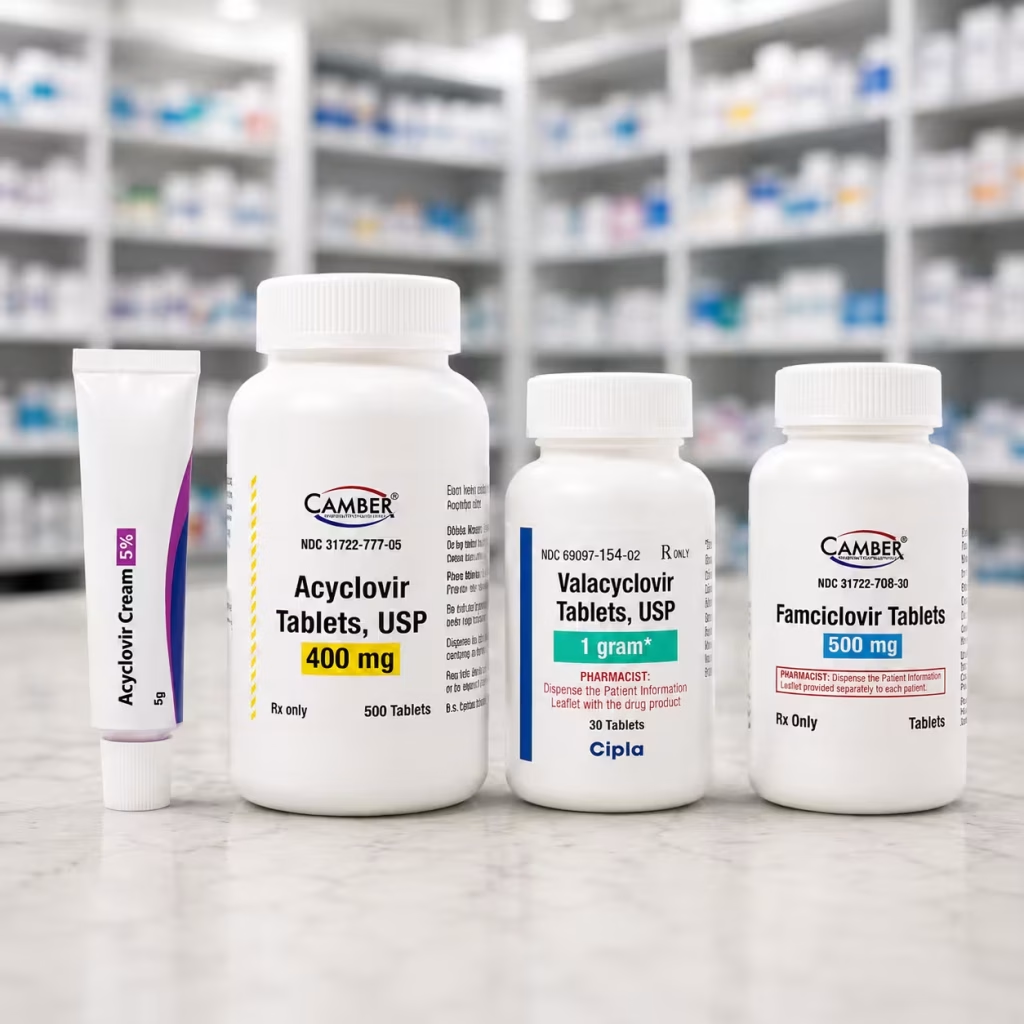
Commonly treated with Valacyclovir, Acyclovir & Famciclovir
Medication as Low as $25.00



How It Works
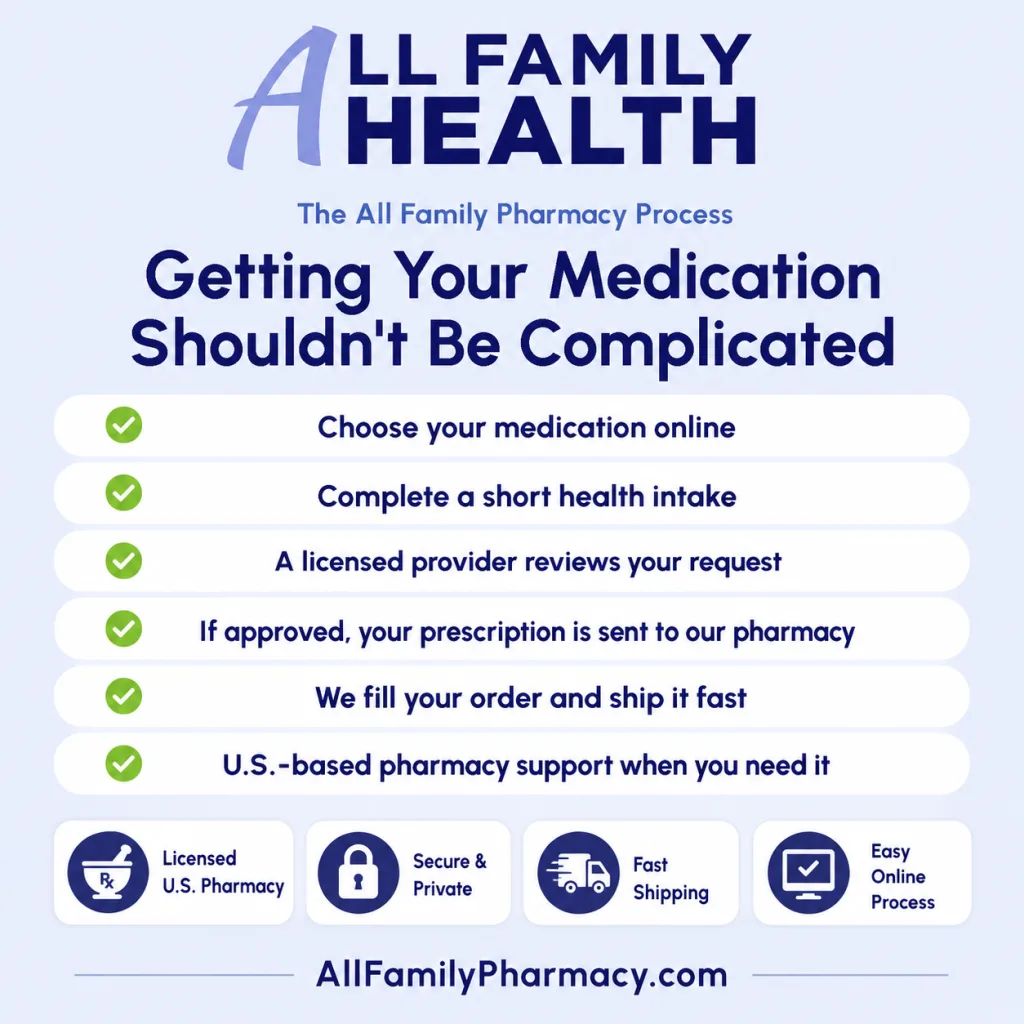
- Step 1Choose TreatmentSelect your treatment and quantity.
- Step 2Complete Health QuestionsAnswer a brief medical intake.
- Step 3Provider ReviewA licensed provider reviews your information.
- Step 4Pharmacy ShipsIf approved, your prescription is filled and shipped.
What patients say
“So far very easy to use and good explanation”
“I LOVE being able to order online prescriptions as needed.”
“I have used All Family Health many times and have never been disappointed. They offer great service and great products.”
“Professional and secure. Safe and efficient process. Thank you!”
“Great Pricing and a great product”
“My order was very easy. Thank you.”
“Very easy to navigate the site”
“Prompt, professional organization.”
“Everything was so simple to do,I can't not be more happy with your business 😁”
“I'm happy I was able to get what I was looking for”
- A one-time provider review fee is added once per order, not per medication
- Transparent pricing with no surprise fees
- Packed and shipped in plain, unmarked packaging
- You only pay if a provider approves your order
- Eligible for HSA and FSA
Choose Your Treatment *
+ $30 provider review & $10 shipping
Refill up to 3 times without a new visit — fast processing.
+ $30 provider review & $10 shipping
Refill up to 3 times without a new visit — fast processing.
+ $30 provider review & $10 shipping
Refill up to 3 times without a new visit — fast processing.
+ $30 provider review & $10 shipping
Refill up to 3 times without a new visit — fast processing.
- Medication$25
- Provider review$30
- Shipping$10
- Total$65
Only charged if approved
Need another? Add more above — one $30 review + $10 shipping per order.
✓ In your cart
- Estimated delivery: Mon–Tue, Nov 23–24
See price breakdown
Refill up to 3 times without a new visit — fast processing.
Estimated delivery: Mon–Tue, Nov 23–24
- Step 1Choose TreatmentSelect your treatment and quantity.
- Step 2Complete Health QuestionsAnswer a brief medical intake.
- Step 3Provider ReviewA licensed provider reviews your information.
- Step 4Pharmacy ShipsIf approved, your prescription is filled and shipped.
Choosing and Using Your Treatment
| Treatment | Choose this if… | How to Take |
|---|---|---|
| Valacyclovir 1000mg | A good first choice for most adults who want the shortest, simplest course. | Take 2 tablets by mouth daily for 5 days. |
| Acyclovir 5% Ointment | you prefer treating the sore directly where it appears, want a topical to use alongside oral Valacyclovir during an outbreak, or would rather avoid oral medication. It's applied right to the affected skin, so the antiviral works at the site of the blister. | Apply every 3 hours, 6 times daily, for 7 days. |
| Acyclovir 400mg | Suits those who have done well on acyclovir before or prefer a lower-cost multi-day course. | Take 1 tablet by mouth five times daily for 10 days. |
| Famciclovir 500mg | A convenient single-dose option for recurrent cold sores taken at the first sign of symptoms. | Take 1 tablet by mouth every 8 hours for 7 days. Start within 72 hours of the rash. Complete the full course. |
What is Cold Sores?
Also called: Oral Herpes (Herpes Labialis, HSV-1)
Cold sores, sometimes called fever blisters, are a very common skin condition caused by the herpes simplex virus — most often type 1 (HSV-1). After the first infection, the virus stays dormant in nerve cells and can reactivate from time to time, causing sores on the lip, around the mouth, or occasionally inside the mouth. Many people notice tingling, itching, or burning a day or so before a blister appears. The blisters typically break open, crust over, and heal within about 7 to 10 days without scarring. Cold sores are contagious, particularly when blisters are present, and spread through close contact such as kissing or sharing utensils. While there is no cure for the virus, prescription antivirals can shorten healing time and may reduce how often outbreaks occur.
Common symptoms
- Tingling, itching, or burning around the lips a day or two before a sore appears
- Small fluid-filled blisters, most often cold sores on the lip or around the mouth
- Blisters that break open, ooze, and form a yellowish crust
- Pain or soreness at the blister site
- Occasionally sores inside the mouth, especially with a first infection
- With first outbreaks: fever, sore throat, or swollen lymph nodes
Causes & risk factors
- Infection with the herpes simplex virus, usually type 1 (HSV-1)
- Close personal contact, such as kissing someone with an active sore
- Sharing utensils, razors, towels, or lip products with an infected person
- Reactivation triggers like stress, fatigue, or illness (colds, fever)
- Sun exposure or wind on the lips
- Hormonal changes, such as menstruation
- A weakened immune system
Treatment options for Cold Sores
Compare the medications offered on this page. Your provider will choose the right one for you based on your answers.
Valacyclovir 1000mg
from $25Antiviral (nucleoside analog)
- Good choice if
- A good first choice for most adults who want the shortest, simplest course.
- Typical dosing
- Take 2 tablets by mouth daily for 5 days.
Acyclovir 5% Ointment
from $25Topical antiviral
- Good choice if
- you prefer treating the sore directly where it appears, want a topical to use alongside oral Valacyclovir during an outbreak, or would rather avoid oral medication. It's applied right to the affected skin, so the antiviral works at the site of the blister.
- Typical dosing
- Apply every 3 hours, 6 times daily, for 7 days.
Acyclovir 400mg
from $25Antiviral (nucleoside analog)
- Good choice if
- Suits those who have done well on acyclovir before or prefer a lower-cost multi-day course.
- Typical dosing
- Take 1 tablet by mouth five times daily for 10 days.
Famciclovir 500mg
from $30Antiviral (nucleoside analogue)
- Good choice if
- A convenient single-dose option for recurrent cold sores taken at the first sign of symptoms.
- Typical dosing
- Take 1 tablet by mouth every 8 hours for 7 days. Start within 72 hours of the rash. Complete the full course.
Prices are for the medication only. Provider review and shipping are shown at checkout.
When to see a doctor in person
Online treatment is a good fit for adults with typical, recurrent cold sores who recognize their early warning signs and want fast access to antiviral medication. See a provider in person if sores are unusually large, last longer than two weeks, keep coming back very frequently, or if you have a weakened immune system (for example, from cancer treatment or HIV). Seek prompt medical care if you develop eye pain, redness, or vision changes during an outbreak — HSV infection of the eye can threaten sight — or if a young infant develops sores, high fever, or trouble feeding, which requires urgent evaluation.
Prevention & self-care
- Avoid kissing or skin contact with anyone who has an active cold sore
- Do not share utensils, cups, towels, razors, or lip balm
- Use lip balm with sunscreen if sunlight triggers your outbreaks
- Wash your hands often, especially after touching a sore
- Avoid touching your eyes or genitals during an outbreak
- Manage common triggers like stress and lack of sleep
- Ask a provider about daily antiviral therapy if outbreaks are frequent
Cold Sores FAQ
What causes cold sores?
Cold sores are caused by the herpes simplex virus, most commonly type 1 (HSV-1). Once you are infected, the virus remains in your body and can reactivate later. Common triggers for recurrences include stress, illness, sun exposure, fatigue, and hormonal changes.
Are cold sores always herpes?
Yes — true cold sores are caused by the herpes simplex virus, usually HSV-1. However, not every lip or mouth sore is a cold sore; canker sores, for example, occur inside the mouth and are not caused by a virus. A provider can help tell the difference if you are unsure.
How long do cold sores last?
Most cold sores heal on their own within about 7 to 10 days. Prescription antiviral medicines can shorten this by roughly a day or more when started early, ideally at the first tingle. First-time outbreaks may last longer and feel more severe than recurrences.
Are cold sores contagious?
Yes. Cold sores spread easily through direct contact, such as kissing or sharing utensils, and are most contagious when blisters are open and oozing. The virus can sometimes spread even when no sore is visible, though this is less common. Sores are generally considered contagious until fully crusted over and healed.
What kills cold sores instantly?
Nothing eliminates a cold sore instantly, and you should be cautious of products claiming otherwise. Prescription antivirals such as valacyclovir, acyclovir, or famciclovir are the most effective option and work best when taken at the very first sign of tingling. They can shorten healing time and reduce discomfort, but the sore still needs time to heal.
How to get rid of cold sores fast?
The fastest evidence-based approach is starting a prescription antiviral within the first 24 to 48 hours of symptoms — ideally at the tingling stage, before a blister forms. Keeping the area clean, avoiding picking at the sore, and using a cold compress or over-the-counter pain relief can also help with comfort. People with frequent outbreaks sometimes keep antiviral medication on hand so they can start it immediately.
What do cold sores look like?
Cold sores start as a small patch of redness or tingling, then develop into one or more small fluid-filled blisters, usually on the edge of the lip. The blisters often merge, break open, ooze, and then form a yellowish crust. They typically heal without a scar within a week to ten days.
Does lysine work for cold sores?
Lysine is an amino acid supplement some people take hoping to prevent or shorten cold sores. Research results are mixed, and lysine is not FDA-approved to treat or prevent cold sores. Prescription antivirals have much stronger evidence; talk with your provider or pharmacist before adding supplements.
The Stages of a Cold Sore
Cold sores follow a predictable pattern. Recognizing the earliest stage matters, because antiviral medication works best when started before the blister fully forms.
| Stage | Typical Timing | What Happens |
|---|---|---|
| Tingling | Day 1 | Itching, burning, or tingling on the lip — the best time to start antivirals |
| Blistering | Days 2–3 | Small fluid-filled blisters appear, often in a cluster |
| Weeping | Days 3–4 | Blisters break open and ooze — the most contagious stage |
| Crusting | Days 5–8 | A scab forms; avoid picking so it can heal |
| Healing | Days 8–10 | The scab falls off and skin heals, usually without scarring |
Common Myths About Cold Sores
- Myth: Cold sores mean poor hygiene. HSV-1 is extremely common — many adults carry the virus, often acquired in childhood.
- Myth: You can only spread cold sores when a blister is visible. The virus can occasionally shed and spread even without symptoms, though active sores are far more contagious.
- Myth: Cold sores and canker sores are the same. Canker sores occur inside the mouth, are not caused by a virus, and are not contagious.
- Myth: Antivirals cure the virus. No medication removes HSV from the body, but antivirals shorten outbreaks and can reduce how often they occur.