
Ear Ache Relief & Prescription Treatment
Commonly treated with Amoxicillin & antibiotic ear drops
Medication as Low as $20.00


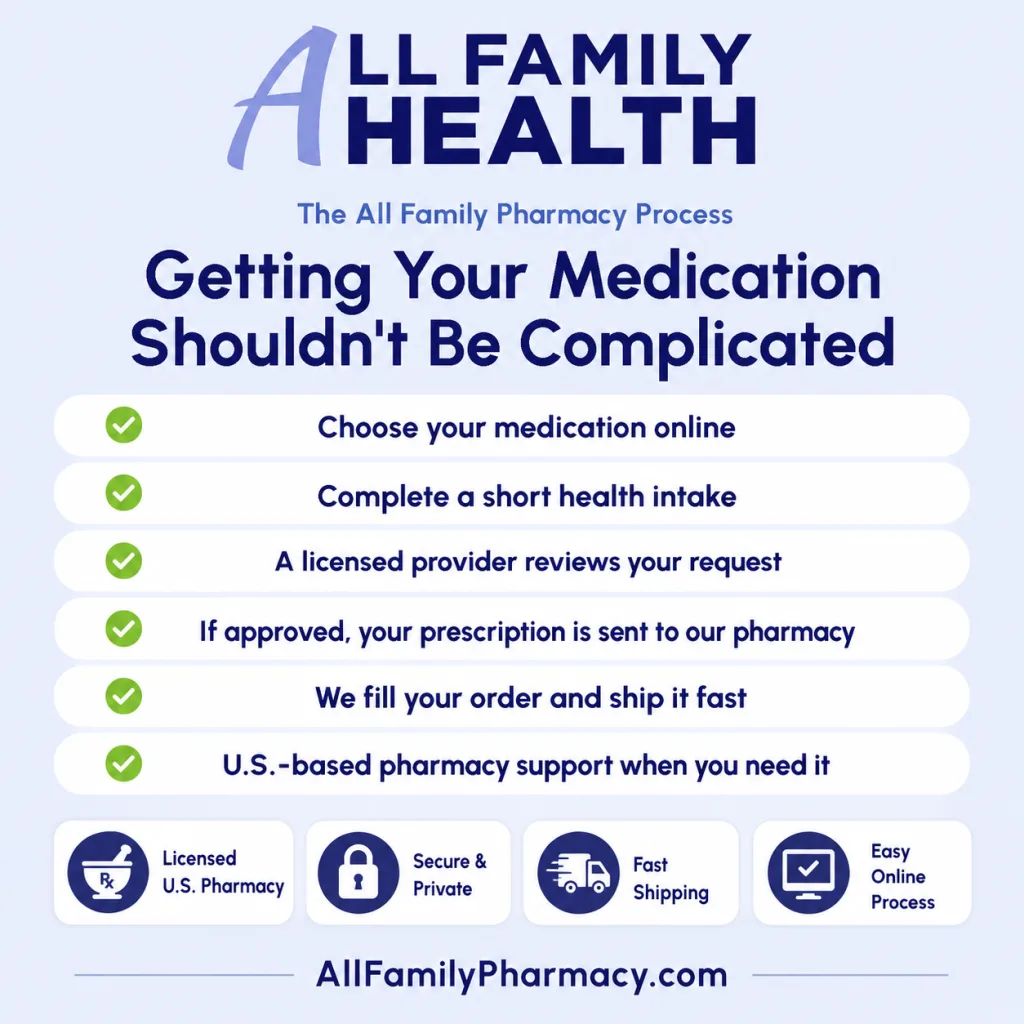
How It Works
- Step 1Choose TreatmentSelect your treatment and quantity.
- Step 2Complete Health QuestionsAnswer a brief medical intake.
- Step 3Provider ReviewA licensed provider reviews your information.
- Step 4Pharmacy ShipsIf approved, your prescription is filled and shipped.
What patients say
“So far very easy to use and good explanation”
“I LOVE being able to order online prescriptions as needed.”
“I have used All Family Health many times and have never been disappointed. They offer great service and great products.”
“Professional and secure. Safe and efficient process. Thank you!”
“Great Pricing and a great product”
“My order was very easy. Thank you.”
“Very easy to navigate the site”
“Prompt, professional organization.”
“Everything was so simple to do,I can't not be more happy with your business 😁”
“I'm happy I was able to get what I was looking for”
Choose Your Treatment *
+ $30 provider review & $10 shipping only charged if approved
+ $30 provider review & $10 shipping only charged if approved
+ $30 provider review & $10 shipping only charged if approved
+ $30 provider review & $10 shipping only charged if approved
- Medication$75
- Provider review$30
- Shipping$10
- Total$115
Only charged if approved
Need another? Add more above — one $30 review + $10 shipping per order.
✓ In your cart
- Only charged if a provider approves your prescription
- Estimated delivery: Thu–Fri, Oct 22–23
See price breakdown
Estimated delivery: Thu–Fri, Oct 22–23 · discreet packaging
Refills at provider discretion.
How It Works
- Step 1Choose TreatmentSelect your treatment and quantity.
- Step 2Complete Health QuestionsAnswer a brief medical intake.
- Step 3Provider ReviewA licensed provider reviews your information.
- Step 4Pharmacy ShipsIf approved, your prescription is filled and shipped.
Choosing and Using Your Treatment
| Treatment | Choose this if… | How to Take |
|---|---|---|
| Ciprofloxacin HCL/Dexamethasone Otic 0.3-0.1% | Antibiotic-steroid ear drops for swimmer's ear (outer ear canal infection) with swelling and pain. | Instill 4 drops into the affected ear twice daily for 7 days. |
| Ofloxacin 0.3% Otic Solution | Antibiotic ear drops for outer ear infections, including when the eardrum may be perforated. | Instill 10 drops into the affected ear once daily for 7 days. |
| Amoxicillin and Clavulanate 875mg/125mg | Suits middle ear infections that did not improve on amoxicillin or recurred within 30 days. | Take 1 tablet by mouth twice daily for 10 days. |
| Amoxicillin 875mg | First-line oral antibiotic for a bacterial middle ear infection in adults without penicillin allergy. | Take 1 tablet by mouth twice daily for 10 days. |
What is Ear Ache?
Also called: Earache (Otalgia)
Ear ache pain can feel sharp, dull, or burning, and it may be constant or come and go. In children, the most common cause is a middle ear infection (otitis media), which often follows a cold. In adults, ear pain frequently comes from swimmer's ear (an infection of the ear canal), earwax buildup, sinus pressure, or pain referred from the jaw or throat — which is why an ear ache and sore throat often occur together. Fluid behind the eardrum can also cause muffled hearing and a feeling of fullness. Treatment depends on the cause: some ear aches only need pain relief and time, while bacterial infections may be treated with oral antibiotics or antibiotic ear drops. A provider review helps determine which approach fits your situation.
Common symptoms
- Sharp, dull, or burning pain in one or both ears
- A feeling of fullness or pressure in the ear
- Muffled hearing or temporary hearing loss
- Fluid or discharge draining from the ear
- Ear ache and sore throat occurring together
- Fever, irritability, or ear tugging in children
- Itching or tenderness of the outer ear canal
Causes & risk factors
- Middle ear infection (otitis media), often after a cold
- Swimmer's ear — infection of the outer ear canal
- Earwax buildup or a blocked ear canal
- Sinus infections and congestion causing pressure changes
- Referred pain from a sore throat, dental problem, or jaw (TMJ) issue
- Air pressure changes from flying or altitude
- A foreign object or injury inside the ear canal
Treatment options for Ear Ache
Compare the medications offered on this page. Your provider will choose the right one for you based on your answers.
Fluoroquinolone antibiotic / corticosteroid combination
- Good choice if
- Antibiotic-steroid ear drops for swimmer's ear (outer ear canal infection) with swelling and pain.
- Typical dosing
- Instill 4 drops into the affected ear twice daily for 7 days.
Ofloxacin 0.3% Otic Solution
from $25Fluoroquinolone antibiotic (otic)
- Good choice if
- Antibiotic ear drops for outer ear infections, including when the eardrum may be perforated.
- How it works
- Works by stopping the growth of bacteria that cause ear infections.
- Typical dosing
- Instill 10 drops into the affected ear once daily for 7 days.
Penicillin-class antibiotic combination
- Good choice if
- Suits middle ear infections that did not improve on amoxicillin or recurred within 30 days.
- Typical dosing
- Take 1 tablet by mouth twice daily for 10 days.
Amoxicillin 875mg
from $20Penicillin antibiotic
- Good choice if
- First-line oral antibiotic for a bacterial middle ear infection in adults without penicillin allergy.
- How it works
- Works by stopping the growth of susceptible bacteria.
- Typical dosing
- Take 1 tablet by mouth twice daily for 10 days.
Prices are for the medication only. Provider review and shipping are shown at checkout.
When to see a doctor in person
An online visit is a good fit for mild to moderate ear pain in adults and older children with symptoms suggesting a common ear infection, especially when there is no high fever or severe illness. Seek in-person care if pain is severe or lasts more than 2–3 days, if there is discharge or blood from the ear, sudden hearing loss, or symptoms in an infant under 6 months. Go to urgent or emergency care for a high fever, swelling or redness behind the ear, severe dizziness, facial weakness, stiff neck, or a suspected object lodged in the ear — these can signal complications that need a hands-on exam.
Prevention & self-care
- Dry ears gently after swimming or bathing
- Avoid inserting cotton swabs or objects into the ear canal
- Treat colds, allergies, and sinus congestion promptly
- Wash hands often to reduce upper respiratory infections
- Avoid smoking and secondhand smoke, which raise ear infection risk
- Keep up to date on recommended vaccines, including flu and pneumococcal
- Use earplugs or a swim cap if you are prone to swimmer's ear
Ear Ache FAQ
How to get rid of an ear ache?
Many ear aches improve within a few days with rest, over-the-counter pain relievers, and a warm compress against the ear. If the pain comes from a bacterial infection, a provider may prescribe oral antibiotics or antibiotic ear drops. Persistent or worsening pain should always be evaluated rather than waited out.
What causes an ear ache?
Common causes include middle ear infections, swimmer's ear, earwax buildup, and pressure from sinus congestion or colds. Ear pain can also be referred from the throat, teeth, or jaw joint. Identifying the cause matters because each is treated differently.
What to do for an ear ache?
Start with over-the-counter pain relief such as acetaminophen or ibuprofen (used per package labeling), a warm compress, and keeping the ear dry. If pain lasts more than a couple of days, is severe, or comes with fever, drainage, or hearing changes, have a provider evaluate it. Avoid putting cotton swabs or unapproved drops into the ear.
What helps an ear ache?
Pain relievers, warm or cool compresses, staying upright, and treating congestion can all ease ear ache discomfort. For confirmed bacterial infections, prescription antibiotics or medicated ear drops address the underlying cause. Home remedies for ear ache can help with comfort but do not replace treatment when an infection is present.
What to take for ear ache?
Over-the-counter acetaminophen or ibuprofen is typically used first for ear pain. If a bacterial infection is diagnosed, a provider may prescribe an oral antibiotic like amoxicillin or antibiotic ear drops for swimmer's ear. The right medicine depends on the cause, which is why a provider review is important.
How to stop an ear ache?
Short-term relief usually comes from pain relievers and a warm compress, while the underlying cause resolves or is treated. Viral ear infections often clear on their own within a few days; bacterial infections may need a prescribed antibiotic course. If pain doesn't improve within 48–72 hours, seek medical evaluation.
Why do I have an ear ache and sore throat at the same time?
The ears and throat share nerve pathways and are connected by the eustachian tubes, so throat infections often cause referred ear pain. Colds, strep throat, and tonsillitis are common culprits. If both symptoms persist or a fever develops, a provider can determine whether antibiotics are needed.
Middle Ear Infection vs. Swimmer's Ear
Two of the most common causes of ear ache are treated very differently, so identifying which one you have matters.
| Feature | Middle Ear Infection | Swimmer's Ear |
|---|---|---|
| Location | Behind the eardrum | Outer ear canal |
| Common trigger | Colds, congestion, allergies | Water exposure, ear canal injury |
| Typical clue | Pressure, muffled hearing, fever | Pain when tugging the outer ear, itching |
| Typical treatment | Pain relief; oral antibiotics if bacterial | Antibiotic ear drops; keeping the ear dry |
Home Remedies for Ear Ache: What Helps and What to Avoid
- Can help: a warm or cool compress held against the ear, over-the-counter pain relievers used per package labeling, sleeping with the affected ear elevated, and treating nasal congestion.
- Avoid: inserting cotton swabs, ear candling, or putting oils and unapproved liquids into the ear canal — these can worsen infection or damage the eardrum.
- Recovery expectations: many viral ear aches improve within 2–3 days; prescribed antibiotic courses should be completed even if pain resolves early.
Home remedies ease discomfort but do not treat bacterial infections — see a provider if symptoms persist or worsen.