
Order Prescription Eczema Cream Online
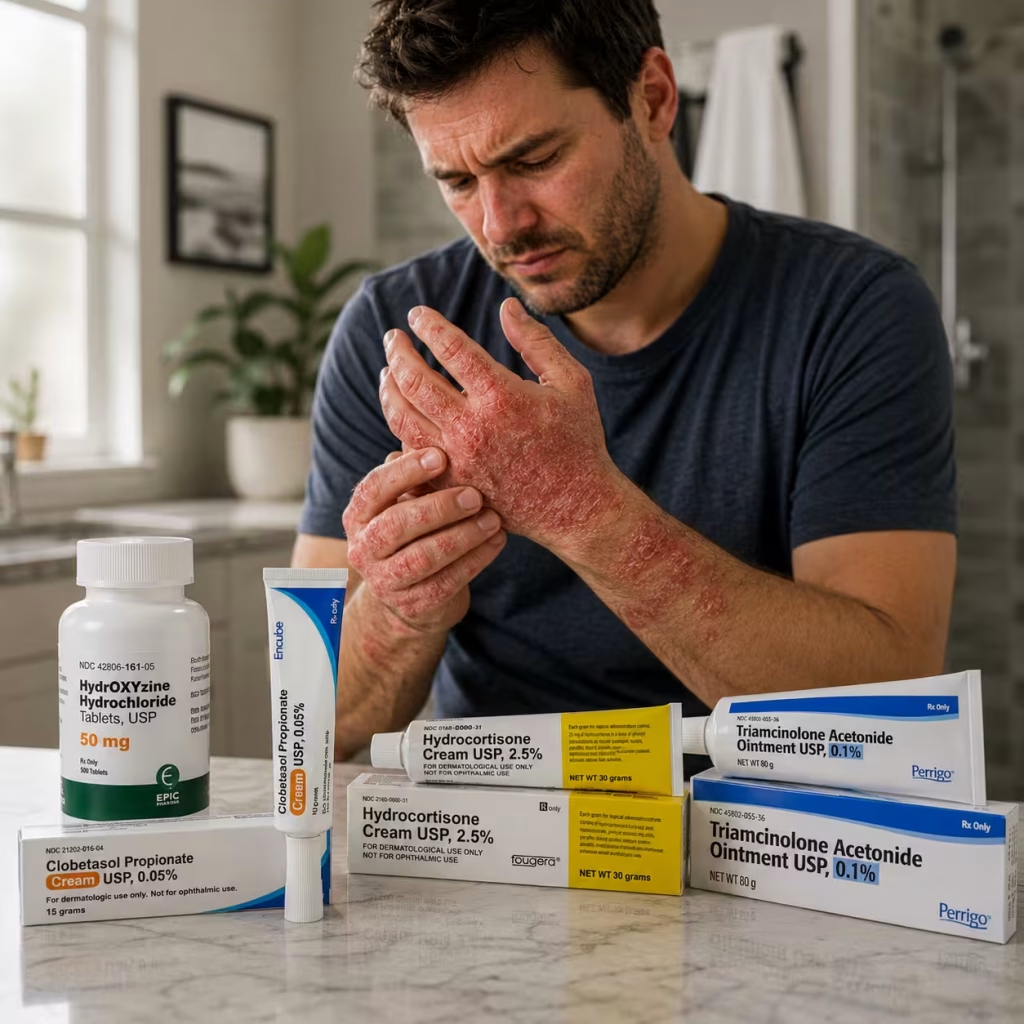
Commonly treated with Hydrocortisone, Triamcinolone & Clobetasol
Medication as Low as $20.00


How It Works
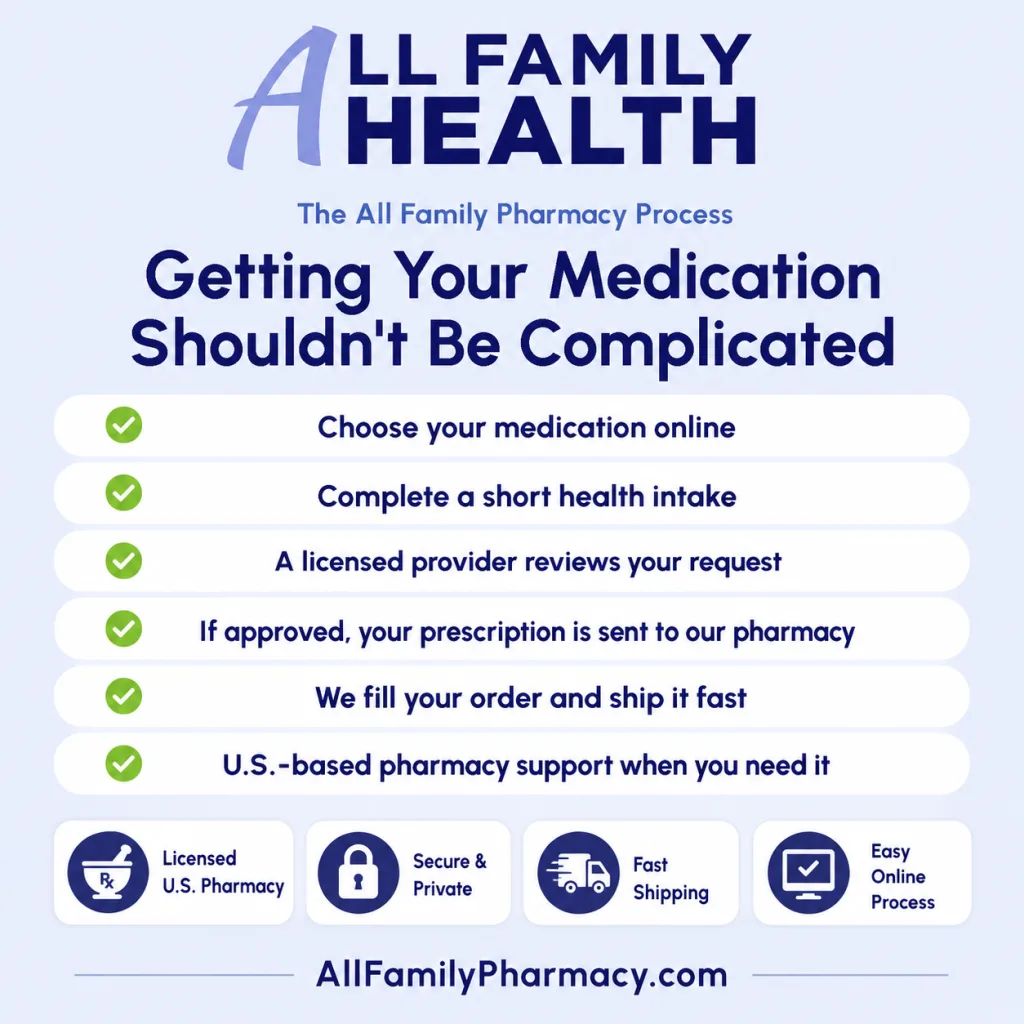
- Step 1Choose TreatmentSelect your treatment and quantity.
- Step 2Complete Health QuestionsAnswer a brief medical intake.
- Step 3Provider ReviewA licensed provider reviews your information.
- Step 4Pharmacy ShipsIf approved, your prescription is filled and shipped.
What patients say
“So far very easy to use and good explanation”
“I LOVE being able to order online prescriptions as needed.”
“I have used All Family Health many times and have never been disappointed. They offer great service and great products.”
“Professional and secure. Safe and efficient process. Thank you!”
“Great Pricing and a great product”
“My order was very easy. Thank you.”
“Very easy to navigate the site”
“Prompt, professional organization.”
“Everything was so simple to do,I can't not be more happy with your business 😁”
“I'm happy I was able to get what I was looking for”
- A one-time provider review fee is added once per order, not per medication
- Transparent pricing with no surprise fees
- Packed and shipped in plain, unmarked packaging
- You only pay if a provider approves your order
- Eligible for HSA and FSA
Choose Your Treatment *
+ $30 provider review & $10 shipping
Refill up to 3 times without a new visit — fast processing.
+ $30 provider review & $10 shipping
Refill up to 3 times without a new visit — fast processing.
+ $30 provider review & $10 shipping
+ $30 provider review & $10 shipping
Refill up to 3 times without a new visit — fast processing.
- Medication$20
- Provider review$30
- Shipping$10
- Total$60
Only charged if approved
Need another? Add more above — one $30 review + $10 shipping per order.
✓ In your cart
- Estimated delivery: Mon–Tue, Nov 23–24
See price breakdown
Refill up to 3 times without a new visit — fast processing.
Estimated delivery: Mon–Tue, Nov 23–24
- Step 1Choose TreatmentSelect your treatment and quantity.
- Step 2Complete Health QuestionsAnswer a brief medical intake.
- Step 3Provider ReviewA licensed provider reviews your information.
- Step 4Pharmacy ShipsIf approved, your prescription is filled and shipped.
Choosing and Using Your Treatment
| Treatment | Choose this if… | How to Take |
|---|---|---|
| Hydrocortisone 2.5% Cream | Mild eczema or flare-ups on sensitive areas such as the face, neck, or skin folds. Often paired with hydroxyzine at night to help control itching that disturbs sleep. | Apply a thin layer to the affected area twice daily for up to 2 weeks. |
| Triamcinolone 0.1% Ointment | Moderate eczema on the body, arms, legs, or hands. Often paired with hydroxyzine at night to help control itching that disturbs sleep. | Apply a thin layer to the affected area twice daily for up to 2 weeks. |
| Clobetasol 0.05% Ointment | Severe or thickened eczema patches that have not improved with milder steroid creams. | Apply a thin layer to the affected area twice daily for up to 2 weeks. |
| Hydroxyzine HCL 50mg | Intense itching from eczema, especially itching that interferes with sleep. Commonly combined with a topical steroid, which treats the rash while hydroxyzine relieves itch. | Take 1 tablet by mouth up to 3 times daily as needed for allergy symptoms or itching. |
What is Eczema?
Also called: Atopic Dermatitis
Eczema is a chronic skin condition that makes the skin dry, itchy, and inflamed. It happens when the skin's protective barrier doesn't hold moisture well and the immune system overreacts to everyday triggers. Eczema often starts in childhood, but it can appear at any age, and it commonly affects the face, hands, and the creases of the elbows and knees. There are several types, including atopic dermatitis, dyshidrotic eczema (small blisters on the hands and feet), and nummular eczema (coin-shaped patches). Eczema is not contagious, and while there is no permanent cure, most people can control symptoms well with moisturizers, trigger avoidance, and prescription treatment during flare-ups.
Common symptoms
- Dry, itchy patches of skin that may crack or flake
- A red or discolored eczema rash, often in the elbow and knee creases
- Eczema on the face, eyelids, neck, or hands
- Small, deep blisters on the palms, fingers, or feet (dyshidrotic eczema)
- Coin-shaped scaly patches on the arms or legs (nummular eczema)
- Thickened, leathery skin from repeated scratching
- Oozing, crusting, or swelling during flare-ups
Causes & risk factors
- A weakened skin barrier that lets moisture out and irritants in
- An overactive immune response to everyday substances
- Genetics — eczema often runs in families with allergies or asthma
- Irritants such as harsh soaps, detergents, and fragrances
- Allergens like dust mites, pollen, or certain foods
- Dry air, cold weather, sweating, or hot showers
- Stress, which can trigger or worsen flare-ups
Treatment options for Eczema
Compare the medications offered on this page. Your provider will choose the right one for you based on your answers.
Hydrocortisone 2.5% Cream
from $20Topical corticosteroid
- Good choice if
- Mild eczema or flare-ups on sensitive areas such as the face, neck, or skin folds. Often paired with hydroxyzine at night to help control itching that disturbs sleep.
- Typical dosing
- Apply a thin layer to the affected area twice daily for up to 2 weeks.
Triamcinolone 0.1% Ointment
from $30Topical corticosteroid
- Good choice if
- Moderate eczema on the body, arms, legs, or hands. Often paired with hydroxyzine at night to help control itching that disturbs sleep.
- Typical dosing
- Apply a thin layer to the affected area twice daily for up to 2 weeks.
Clobetasol 0.05% Ointment
from $25Topical corticosteroid (super-high potency)
- Good choice if
- Severe or thickened eczema patches that have not improved with milder steroid creams.
- Typical dosing
- Apply a thin layer to the affected area twice daily for up to 2 weeks.
Hydroxyzine HCL 50mg
from $30First-generation antihistamine
- Good choice if
- Intense itching from eczema, especially itching that interferes with sleep. Commonly combined with a topical steroid, which treats the rash while hydroxyzine relieves itch.
- Typical dosing
- Take 1 tablet by mouth up to 3 times daily as needed for allergy symptoms or itching.
Prices are for the medication only. Provider review and shipping are shown at checkout.
When to see a doctor in person
Online treatment is a good fit for mild to moderate eczema flare-ups in adults who have typical symptoms, such as dry, itchy patches on the body, hands, or face. See a provider in person if the rash is widespread, keeps returning despite treatment, involves the eyes, or if you're unsure whether it's eczema or another condition like psoriasis or a fungal infection. Seek prompt medical care if the skin shows signs of infection — spreading redness, warmth, pus, yellow crusting, or fever — or if a child develops a severe or rapidly worsening rash. Painful blistering rashes with fever need emergency evaluation.
Prevention & self-care
- Moisturize the skin at least once or twice daily with a thick, fragrance-free cream
- Take short, lukewarm showers instead of long, hot ones
- Use gentle, fragrance-free cleansers and laundry detergents
- Identify and avoid your personal triggers, such as certain fabrics or allergens
- Use a humidifier when indoor air is dry
- Wear soft, breathable fabrics like cotton and avoid wool against the skin
- Manage stress, which is a common flare-up trigger
Eczema FAQ
What is eczema?
Eczema is a chronic skin condition that causes dry, itchy, inflamed patches of skin. The most common type is atopic dermatitis, which is linked to a weakened skin barrier and an overactive immune response. It tends to flare up and improve in cycles and often runs in families.
What causes eczema?
Eczema is caused by a combination of genetics and environment. People with eczema often have a skin barrier that doesn't retain moisture well, plus an immune system that overreacts to triggers like irritants, allergens, dry air, sweat, and stress. It frequently runs in families alongside asthma and hay fever.
Is eczema contagious?
No. Eczema cannot be spread from person to person through touch or shared items. However, eczema-damaged skin can become infected with bacteria or viruses, and those infections may need separate treatment.
How to cure eczema permanently?
There is currently no permanent cure for eczema. The good news is that it can usually be managed well with daily moisturizing, avoiding triggers, and prescription treatments such as topical steroid creams during flare-ups. Many children see their eczema improve significantly or resolve as they get older.
Does eczema go away?
Eczema often improves with age, and many children outgrow it, but for others it is a lifelong condition that comes and goes. Flare-ups typically calm down with consistent skin care and treatment. Long symptom-free periods are common with good management.
Is eczema an autoimmune disease?
Eczema is not classified as a classic autoimmune disease, because the immune system does not attack the body's own tissue the way it does in conditions like lupus. It is considered an immune-mediated inflammatory condition, meaning an overactive immune response plays a central role in symptoms.
What causes eczema flare ups?
Common flare-up triggers include harsh soaps and detergents, fragrances, dry or cold weather, sweating, hot showers, stress, and allergens such as dust mites or pollen. Triggers vary from person to person, so keeping a simple diary of flares can help identify yours.
What does eczema look like?
Eczema usually appears as dry, itchy, red or discolored patches that may flake, crack, ooze, or crust. On darker skin tones, patches may look brown, purple, or gray. Dyshidrotic eczema causes small blisters on the hands and feet, while nummular eczema causes round, coin-shaped patches.
Common Types of Eczema
Eczema is a family of related skin conditions. Knowing which type you have helps guide treatment.
| Type | What it looks like | Common locations |
|---|---|---|
| Atopic dermatitis | Dry, itchy, inflamed patches that flare and calm in cycles | Elbow and knee creases, face, neck, hands |
| Dyshidrotic eczema | Small, deep, very itchy blisters | Palms, sides of fingers, soles of feet |
| Nummular eczema | Round, coin-shaped, scaly patches | Arms, legs, torso |
| Contact dermatitis | Itchy rash where skin touched an irritant or allergen | Hands, wrists, anywhere exposed |
Psoriasis vs. Eczema: How to Tell the Difference
Psoriasis and eczema can look similar, but they are different conditions with different treatments.
- Appearance: Psoriasis tends to form thick, well-defined plaques with silvery scale, while eczema patches are usually drier, less defined, and more prone to oozing or crusting.
- Itch: Eczema is typically intensely itchy; psoriasis may itch, sting, or burn but is often less itchy.
- Location: Eczema favors the creases of the elbows and knees; psoriasis more often affects the outside of the elbows and knees, the scalp, and the nails.
- Age of onset: Eczema commonly starts in early childhood, while psoriasis most often begins in adulthood.
If you're not sure which condition you have, a provider can review photos and your history to help determine the right treatment.