
Order Prescription Migraine Treatment Online
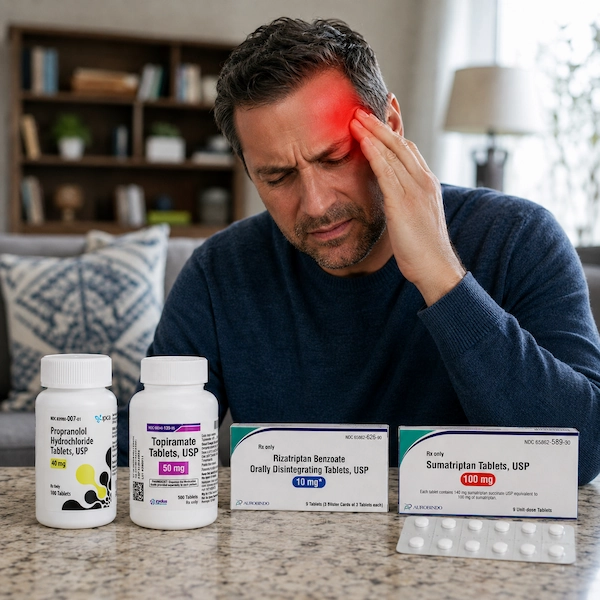
Commonly treated with Sumatriptan, Rizatriptan, Topiramate & Propranolol
Medication as Low as $25.00


How It Works
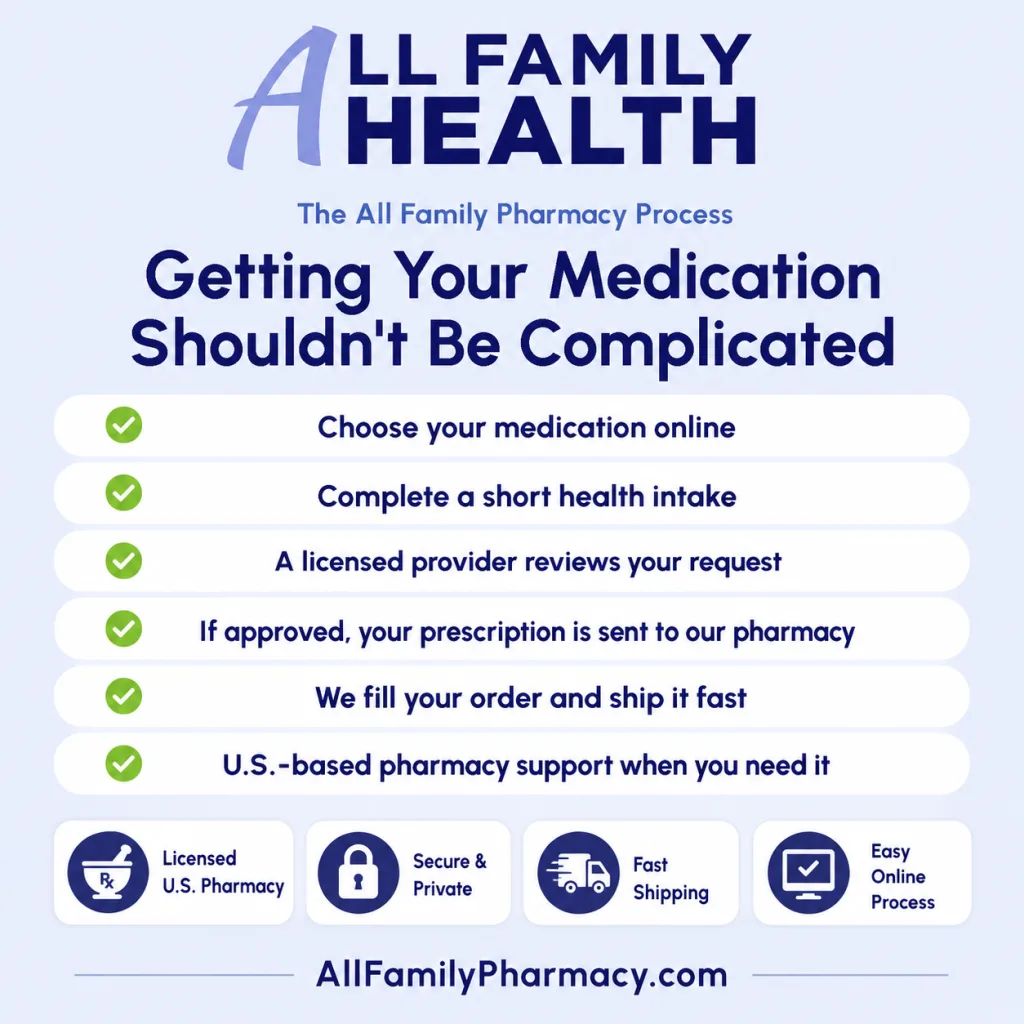
- Step 1Choose TreatmentSelect your treatment and quantity.
- Step 2Complete Health QuestionsAnswer a brief medical intake.
- Step 3Provider ReviewA licensed provider reviews your information.
- Step 4Pharmacy ShipsIf approved, your prescription is filled and shipped.
What patients say
“So far very easy to use and good explanation”
“I LOVE being able to order online prescriptions as needed.”
“I have used All Family Health many times and have never been disappointed. They offer great service and great products.”
“Professional and secure. Safe and efficient process. Thank you!”
“Great Pricing and a great product”
“My order was very easy. Thank you.”
“Very easy to navigate the site”
“Prompt, professional organization.”
“Everything was so simple to do,I can't not be more happy with your business 😁”
“I'm happy I was able to get what I was looking for”
- A one-time provider review fee is added once per order, not per medication
- Transparent pricing with no surprise fees
- Packed and shipped in plain, unmarked packaging
- You only pay if a provider approves your order
- Eligible for HSA and FSA
Choose Your Treatment *
+ $30 provider review & $10 shipping
Refill up to 3 times without a new visit — fast processing.
+ $30 provider review & $10 shipping
Refill up to 3 times without a new visit — fast processing.
+ $30 provider review & $10 shipping
Refill up to 3 times without a new visit — fast processing.
+ $30 provider review & $10 shipping
Refill up to 3 times without a new visit — fast processing.
- Medication$25
- Provider review$30
- Shipping$10
- Total$65
Only charged if approved
Need another? Add more above — one $30 review + $10 shipping per order.
✓ In your cart
- Estimated delivery: Mon–Tue, Nov 23–24
See price breakdown
Refill up to 3 times without a new visit — fast processing.
Estimated delivery: Mon–Tue, Nov 23–24
- Step 1Choose TreatmentSelect your treatment and quantity.
- Step 2Complete Health QuestionsAnswer a brief medical intake.
- Step 3Provider ReviewA licensed provider reviews your information.
- Step 4Pharmacy ShipsIf approved, your prescription is filled and shipped.
Choosing and Using Your Treatment
| Treatment | Choose this if… | How to Take |
|---|---|---|
| Sumatriptan Tablets 100mg | You need a proven acute medication to stop migraine attacks when they start. Often paired with a daily preventive like topiramate when attacks are frequent. | Take 1 tablet by mouth at the onset of migraine; may repeat once after 2 hours if needed, not to exceed 2 tablets in 24 hours. |
| Rizatriptan 10mg ODT | You want a fast-dissolving acute option that can be taken without water, especially with nausea. | Dissolve 1 tablet on the tongue at the onset of migraine; may repeat once after 2 hours if needed, not to exceed 30mg in 24 hours. |
| Topiramate 50mg | You have frequent or chronic migraines and want a daily preventive medication. Commonly used alongside an acute triptan such as sumatriptan for breakthrough attacks. | Take 1 tablet by mouth twice daily. |
| Propranolol 40mg | You want a preventive option, particularly if you also have high blood pressure or a fast heart rate. | Take 1 tablet by mouth twice daily. |
What is Migraines?
Also called: Migraine headache
A migraine is more than a bad headache — it is a neurological condition that causes recurring attacks of moderate to severe head pain, usually on one side of the head. Attacks often come with nausea, vomiting, and sensitivity to light, sound, or smells. Some people experience an aura beforehand, such as flashing lights, zigzag lines, or blind spots. Untreated migraines commonly last from 4 to 72 hours and can interfere with work, school, and daily life. People who have 15 or more headache days per month may have chronic migraines, which often benefit from daily preventive medication in addition to acute treatment. While there is no cure, most people can manage migraines well with the right combination of medication and lifestyle changes.
Common symptoms
- Throbbing or pulsing pain, often on one side of the head
- Nausea or vomiting during an attack
- Sensitivity to light, sound, or smells
- Visual aura such as flashing lights, zigzag lines, or blind spots (ocular migraines)
- Dizziness or a spinning sensation (vestibular migraines)
- Fatigue, mood changes, or neck stiffness before an attack
- Head pain that worsens with routine physical activity
Causes & risk factors
- Genetics — migraines often run in families
- Hormonal changes, a common cause of migraines in females (estrogen shifts around periods, pregnancy, or menopause)
- Stress and poor or irregular sleep
- Skipped meals, dehydration, or certain foods such as aged cheese and alcohol
- Weather or barometric pressure changes
- Bright lights, loud sounds, or strong smells
- Overuse of pain-relief medication, which can cause rebound headaches
Treatment options for Migraines
Compare the medications offered on this page. Your provider will choose the right one for you based on your answers.
Sumatriptan Tablets 100mg
from $25Triptan (5-HT1 receptor agonist)
- Good choice if
- You need a proven acute medication to stop migraine attacks when they start. Often paired with a daily preventive like topiramate when attacks are frequent.
- Typical dosing
- Take 1 tablet by mouth at the onset of migraine; may repeat once after 2 hours if needed, not to exceed 2 tablets in 24 hours.
Rizatriptan 10mg ODT
from $25Triptan (5-HT1 receptor agonist)
- Good choice if
- You want a fast-dissolving acute option that can be taken without water, especially with nausea.
- Typical dosing
- Dissolve 1 tablet on the tongue at the onset of migraine; may repeat once after 2 hours if needed, not to exceed 30mg in 24 hours.
Topiramate 50mg
from $25Anticonvulsant (antiepileptic)
- Good choice if
- You have frequent or chronic migraines and want a daily preventive medication. Commonly used alongside an acute triptan such as sumatriptan for breakthrough attacks.
- Typical dosing
- Take 1 tablet by mouth twice daily.
Propranolol 40mg
from $25Beta-adrenergic blocker
- Good choice if
- You want a preventive option, particularly if you also have high blood pressure or a fast heart rate.
- Typical dosing
- Take 1 tablet by mouth twice daily.
Prices are for the medication only. Provider review and shipping are shown at checkout.
When to see a doctor in person
Online treatment is a good fit if you have an established pattern of migraines and need acute medication, a refill, or want to discuss starting preventive therapy. However, seek in-person or emergency care right away if you experience the worst headache of your life, a sudden 'thunderclap' headache, headache with fever, stiff neck, confusion, weakness, numbness, trouble speaking, or vision loss that does not resolve, headache after a head injury, or a new headache pattern after age 50. New or rapidly changing headaches should always be evaluated in person before starting treatment, and frequent or worsening migraines deserve a full neurological workup.
Prevention & self-care
- Keep a headache diary to identify and avoid your personal triggers
- Maintain a regular sleep schedule and stay hydrated
- Eat meals on a consistent schedule and avoid known food triggers
- Manage stress with exercise, relaxation techniques, or counseling
- Ask your provider about daily preventive medication if attacks are frequent
- Discuss magnesium supplementation with your provider — some evidence supports magnesium for migraine prevention
- Limit frequent use of over-the-counter pain relievers to avoid rebound headaches
Migraines FAQ
What causes migraines?
Migraines are believed to result from abnormal brain activity that affects nerve signaling, chemicals like serotonin, and blood vessels in the brain. Genetics play a large role, and attacks are often set off by triggers such as stress, hormonal changes, poor sleep, skipped meals, certain foods, or weather changes. Triggers vary from person to person, which is why keeping a headache diary is helpful.
How long do migraines last?
A typical migraine attack lasts between 4 and 72 hours if untreated. Some people also experience warning symptoms hours or days before an attack, and a 'hangover' phase of fatigue afterward. Acute medications such as triptans work best when taken early in an attack.
What causes migraines in females?
Migraines are about three times more common in women, largely because of hormonal fluctuations. Drops in estrogen — around menstrual periods, during perimenopause, or after stopping certain hormonal medications — are a well-known trigger. Some women notice their migraines improve after menopause, while pregnancy can either improve or worsen them.
What helps with migraines?
Acute prescription medications called triptans, such as sumatriptan and rizatriptan, can stop attacks when taken early. For frequent migraines, daily preventive medications like topiramate or propranolol can reduce how often attacks occur. Resting in a dark, quiet room, hydration, and cold compresses can also help during an attack.
What causes ocular migraines?
Ocular or visual migraines are thought to be caused by a temporary wave of altered electrical activity in the visual part of the brain, sometimes accompanied by changes in blood flow. They cause short-lived visual disturbances such as flashing lights, shimmering zigzags, or blind spots, usually lasting under an hour. Any new or sudden vision changes should be evaluated in person to rule out other causes.
What do migraines feel like?
Most people describe migraine pain as throbbing or pulsing, often on one side of the head, and worse with movement, light, or sound. Nausea is common, and some people see an aura of flashing lights or zigzag lines before the pain starts. Attacks can be severe enough to make normal activities impossible.
How does Botox help migraines?
Botox (onabotulinumtoxinA) is FDA-approved for chronic migraine, defined as 15 or more headache days per month. It is injected by a trained clinician into specific muscles of the head and neck about every 12 weeks and is believed to block pain signals from certain nerves. Botox requires in-office administration and is not something a pharmacy can ship, but oral preventive medications can be prescribed online.
How to treat migraines?
Treatment usually combines an acute medication taken at the first sign of an attack with trigger avoidance, and — if attacks are frequent — a daily preventive medication. Your provider will choose options based on how often your migraines occur, other health conditions, and medications you already take. A pharmacist and provider review every online prescription before it ships.
Types of Migraines
Not all migraines look the same. Knowing which type you experience helps your provider choose the right treatment.
| Type | Key Features |
|---|---|
| Migraine without aura | The most common type; throbbing head pain with nausea and light/sound sensitivity, no visual warning. |
| Migraine with aura (ocular migraines) | Visual disturbances such as flashing lights or blind spots, usually lasting under an hour before or during head pain. |
| Vestibular migraines | Dizziness, vertigo, or balance problems that may occur with or without headache. |
| Chronic migraines | Headaches on 15 or more days per month for over 3 months; often treated with daily preventive medication or Botox. |
Acute vs. Preventive Treatment
Acute (abortive) medications, such as sumatriptan and rizatriptan, are taken at the first sign of an attack to stop it. They work best when taken early and should generally not be used more than a few days per week, since overuse can cause rebound headaches.
Preventive medications, such as topiramate and propranolol, are taken daily to reduce how often attacks occur and how severe they are. Providers usually consider prevention when someone has four or more migraine days per month. Some patients also discuss magnesium supplementation with their provider, as some studies suggest it may help reduce migraine frequency.