
Order Motion Sickness Medicine Online
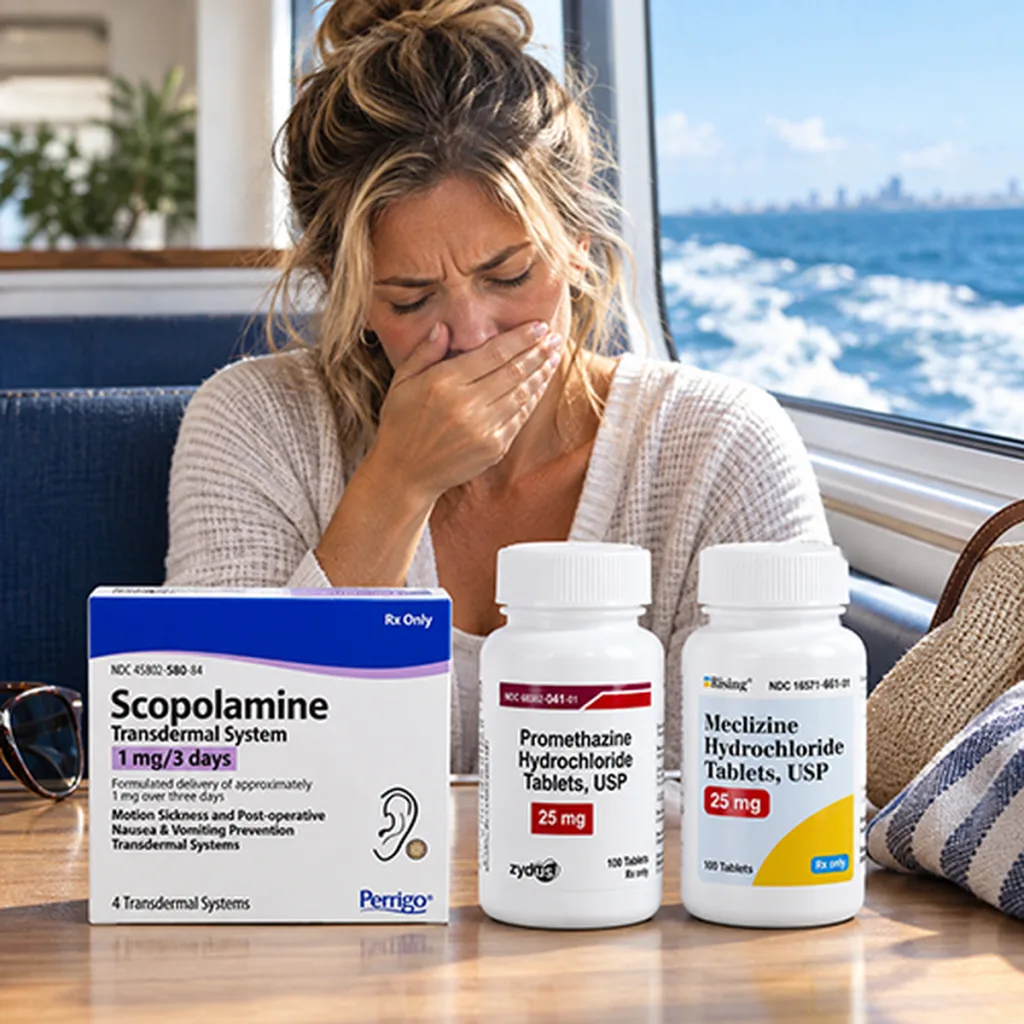
Commonly treated with Scopolamine Patches, Meclizine & Promethazine
Medication as Low as $20.00

How It Works
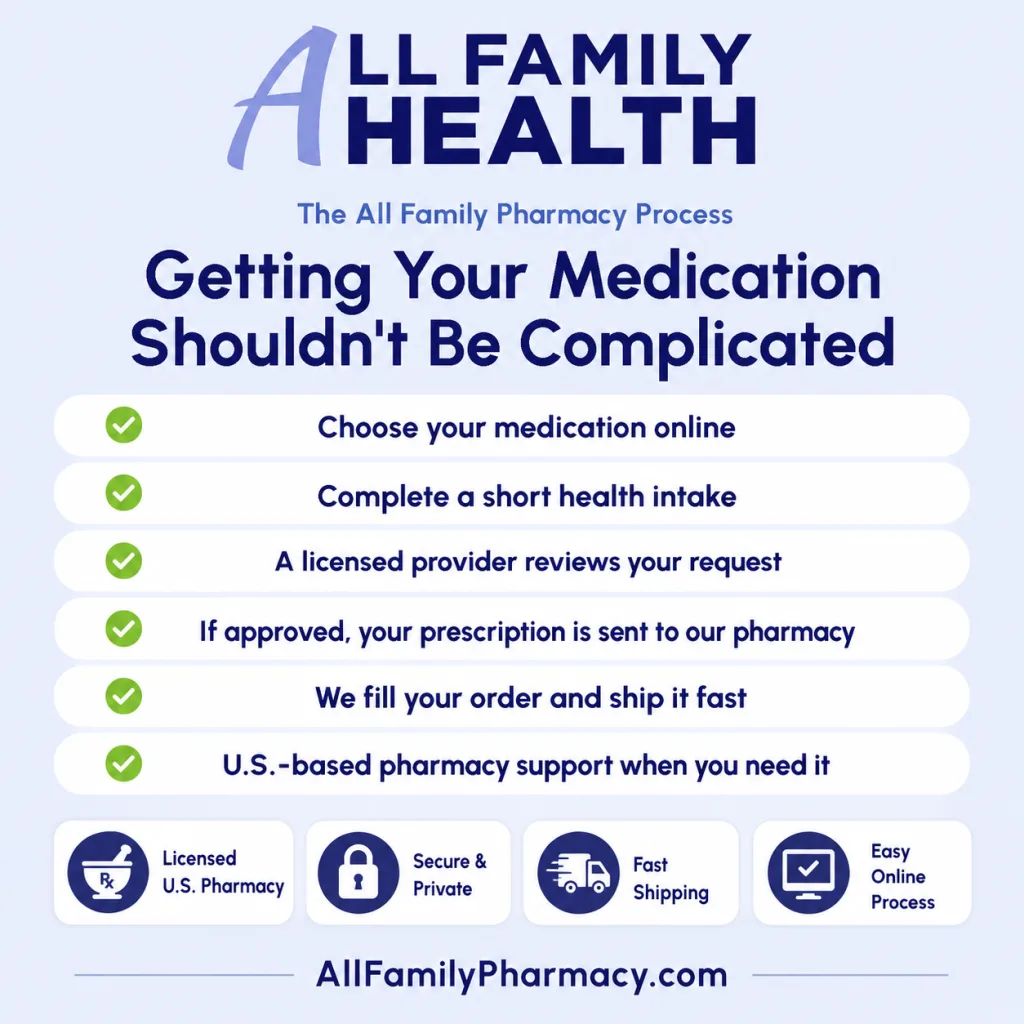
- Step 1Choose TreatmentSelect your treatment and quantity.
- Step 2Complete Health QuestionsAnswer a brief medical intake.
- Step 3Provider ReviewA licensed provider reviews your information.
- Step 4Pharmacy ShipsIf approved, your prescription is filled and shipped.
What patients say
“So far very easy to use and good explanation”
“I LOVE being able to order online prescriptions as needed.”
“I have used All Family Health many times and have never been disappointed. They offer great service and great products.”
“Professional and secure. Safe and efficient process. Thank you!”
“Great Pricing and a great product”
“My order was very easy. Thank you.”
“Very easy to navigate the site”
“Prompt, professional organization.”
“Everything was so simple to do,I can't not be more happy with your business 😁”
“I'm happy I was able to get what I was looking for”
- A one-time provider review fee is added once per order, not per medication
- Transparent pricing with no surprise fees
- Packed and shipped in plain, unmarked packaging
- You only pay if a provider approves your order
- Eligible for HSA and FSA
Choose Your Treatment *
+ $30 provider review & $10 shipping
Refill up to 3 times without a new visit — fast processing.
+ $30 provider review & $10 shipping
Refill up to 3 times without a new visit — fast processing.
+ $30 provider review & $10 shipping
Refill up to 3 times without a new visit — fast processing.
- Medication$40
- Provider review$30
- Shipping$10
- Total$80
Only charged if approved
Need another? Add more above — one $30 review + $10 shipping per order.
✓ In your cart
- Estimated delivery: Mon–Tue, Nov 23–24
See price breakdown
Refill up to 3 times without a new visit — fast processing.
Estimated delivery: Mon–Tue, Nov 23–24
- Step 1Choose TreatmentSelect your treatment and quantity.
- Step 2Complete Health QuestionsAnswer a brief medical intake.
- Step 3Provider ReviewA licensed provider reviews your information.
- Step 4Pharmacy ShipsIf approved, your prescription is filled and shipped.
Choosing and Using Your Treatment
| Treatment | Choose this if… | How to Take |
|---|---|---|
| Scopolamine 1mg Patch | Best for longer trips like cruises or multi-day travel when you want continuous prevention without repeated dosing. | Apply 1 patch to the hairless skin behind the ear at least 4 hours before travel and replace with a new patch every 3 days. |
| Meclizine 25mg | A good once-daily tablet for car trips, flights, and day travel, with less drowsiness than many alternatives. | For motion sickness take 1-2 tablets by mouth 1 hour before travel, repeat every 4-6 hours as needed. For vertigo, take 1 tablet by mouth up to 4 times per day. |
| Promethazine HCL 25mg | Suits travelers with more severe symptoms who tolerate a sedating option, or when other medicines have not worked. | Take 1 tablet by mouth 30 to 60 minutes before travel, then 1 tablet by mouth every 12 hours during travel. |
What is Motion Sickness?
Motion sickness is a common condition triggered by real or perceived movement, such as riding in a car, sailing, flying, or even playing video games or using virtual reality. It occurs when the brain receives conflicting signals from the inner ear, the eyes, and the body about how you are moving. Symptoms usually start with mild queasiness or dizziness and can build to nausea, vomiting, and sweating. Anyone can get motion sickness, but it is most common in children ages 2 to 12, in women (especially during pregnancy), and in people who get migraines. Symptoms typically fade once the motion stops, though some people feel unwell for hours afterward. Both preventive medication and simple behavior changes can make travel much more comfortable.
Common symptoms
- Nausea, sometimes leading to vomiting
- Dizziness or a spinning sensation
- Cold sweats and pale, clammy skin
- Headache or general discomfort
- Increased saliva production
- Fatigue or drowsiness
- Irritability and trouble concentrating
Causes & risk factors
- A mismatch between motion sensed by the inner ear and what the eyes see
- Riding in cars, buses, boats, trains, or airplanes
- Reading or looking at a phone screen while a vehicle is moving
- Amusement park rides and simulators
- Video games, virtual reality, and fast-moving screens (visually induced motion sickness)
- A family history of motion sickness — susceptibility appears partly genetic
- Migraines, pregnancy, and hormonal changes can increase susceptibility
Treatment options for Motion Sickness
Compare the medications offered on this page. Your provider will choose the right one for you based on your answers.
Scopolamine 1mg Patch
from $40Anticholinergic (antimuscarinic)
- Good choice if
- Best for longer trips like cruises or multi-day travel when you want continuous prevention without repeated dosing.
- Typical dosing
- Apply 1 patch to the hairless skin behind the ear at least 4 hours before travel and replace with a new patch every 3 days.
Meclizine 25mg
from $30Antihistamine (antiemetic)
- Good choice if
- A good once-daily tablet for car trips, flights, and day travel, with less drowsiness than many alternatives.
- Typical dosing
- For motion sickness take 1-2 tablets by mouth 1 hour before travel, repeat every 4-6 hours as needed. For vertigo, take 1 tablet by mouth up to 4 times per day.
Promethazine HCL 25mg
from $20Phenothiazine antihistamine
- Good choice if
- Suits travelers with more severe symptoms who tolerate a sedating option, or when other medicines have not worked.
- Typical dosing
- Take 1 tablet by mouth 30 to 60 minutes before travel, then 1 tablet by mouth every 12 hours during travel.
Prices are for the medication only. Provider review and shipping are shown at checkout.
When to see a doctor in person
Online treatment is a good fit for otherwise healthy adults who want prescription prevention for travel-related motion sickness, such as a scopolamine patch before a cruise or antihistamine tablets before a road trip. See a doctor in person if dizziness or vomiting occurs without any motion trigger, keeps happening after travel ends, or comes with hearing changes or ringing in the ears — these can signal an inner ear disorder rather than simple motion sickness. Seek emergency care for severe headache, chest pain, trouble speaking or walking, fainting, signs of dehydration from persistent vomiting, or sudden vision changes, as these are not typical of motion sickness.
Prevention & self-care
- Take motion sickness medicine before travel begins — it works best preventively
- Sit where motion is felt least: the front seat of a car, over the wing of a plane, or midship on a boat
- Look at the horizon or a stable distant object instead of reading or using screens
- Get fresh air and avoid strong odors, heavy meals, and alcohol before travel
- Face forward and keep your head still and supported
- Try acupressure wristbands (motion sickness bracelets) or specially designed motion sickness glasses — evidence is limited but some travelers find them helpful
- Gradually increase exposure to travel, which can reduce sensitivity over time
Motion Sickness FAQ
What is motion sickness?
Motion sickness is a common reaction to real or perceived movement, causing nausea, dizziness, and sweating during car rides, boat trips, flights, or screen use. It happens when the brain receives conflicting signals from the inner ear, eyes, and body. It is not a disease and usually resolves once the motion stops.
What causes motion sickness?
Motion sickness is caused by a sensory mismatch: your inner ear senses movement that your eyes don't see, or vice versa. Reading in a moving car is a classic trigger — your ears feel motion while your eyes see a still page. Children, pregnant women, and people with migraines are more susceptible.
How to stop motion sickness after it starts?
Stop looking at screens or reading, fix your gaze on the horizon, get fresh air, and recline with your head still if possible. Sipping water and taking slow, deep breaths can also help. Medications work best when taken before travel, so if you are prone to motion sickness, plan ahead with a preventive option prescribed by your provider.
How long does motion sickness last?
Symptoms usually improve within minutes to a few hours after the motion stops. Some people experience lingering queasiness, fatigue, or a rocking sensation for several hours, and rarely up to a day or two after long boat trips. Ongoing symptoms without a motion trigger should be evaluated by a doctor.
How to cure motion sickness permanently?
There is no permanent cure for motion sickness, but many people become less sensitive over time through gradual, repeated exposure to travel — a process called habituation. In the meantime, preventive medication and positioning strategies control symptoms well for most people. Children often outgrow it.
Does Zofran help with motion sickness?
Ondansetron (Zofran) treats nausea from chemotherapy, surgery, and some illnesses, but studies have not shown it to be effective at preventing motion sickness. Medications that act on the inner ear and vestibular system — like scopolamine and antihistamines such as meclizine — are the standard choices. Your provider can help select the right option.
Is motion sickness genetic?
Susceptibility to motion sickness appears to be partly genetic and often runs in families. Research has identified multiple gene variants associated with a higher likelihood of getting motion sick. Genetics is only one factor, though — age, hormones, migraines, and the type of motion all play a role.
How do motion sickness glasses work?
Motion sickness glasses have liquid-filled rings that create an artificial horizon in your peripheral vision, aiming to realign what your eyes see with the motion your inner ear feels. Some users report relief, but high-quality evidence is limited. They are a low-risk option to try alongside proven strategies like preventive medication and looking at the horizon.
Comparing Motion Sickness Medicines
All prescription options work best when started before travel begins. The right choice depends on trip length, how severe your symptoms usually are, and how you tolerate drowsiness.
| Option | How it's used | Good to know |
|---|---|---|
| Scopolamine patch | Worn behind the ear; each patch lasts up to 3 days | Often preferred for cruises and long trips; can cause dry mouth and blurred vision |
| Meclizine tablets | Taken about 1 hour before travel, once daily | Convenient for day trips; generally less sedating than older antihistamines |
| Promethazine tablets | Taken 30–60 minutes before travel, up to twice daily | Strong option for severe symptoms; drowsiness is common, so avoid driving |
Special considerations
- Scopolamine patches are for adults and are generally avoided in children, in people with certain types of glaucoma, and in older adults sensitive to anticholinergic effects.
- Sedating medicines like promethazine should not be combined with alcohol or other sedatives, and are not appropriate for young children.
- If you are pregnant or breastfeeding, tell your provider — treatment recommendations differ and some options are not suitable.