Order Overdose Treatment Online
Commonly treated with Naloxone (Narcan) Nasal Spray
Medication as Low as $85.00


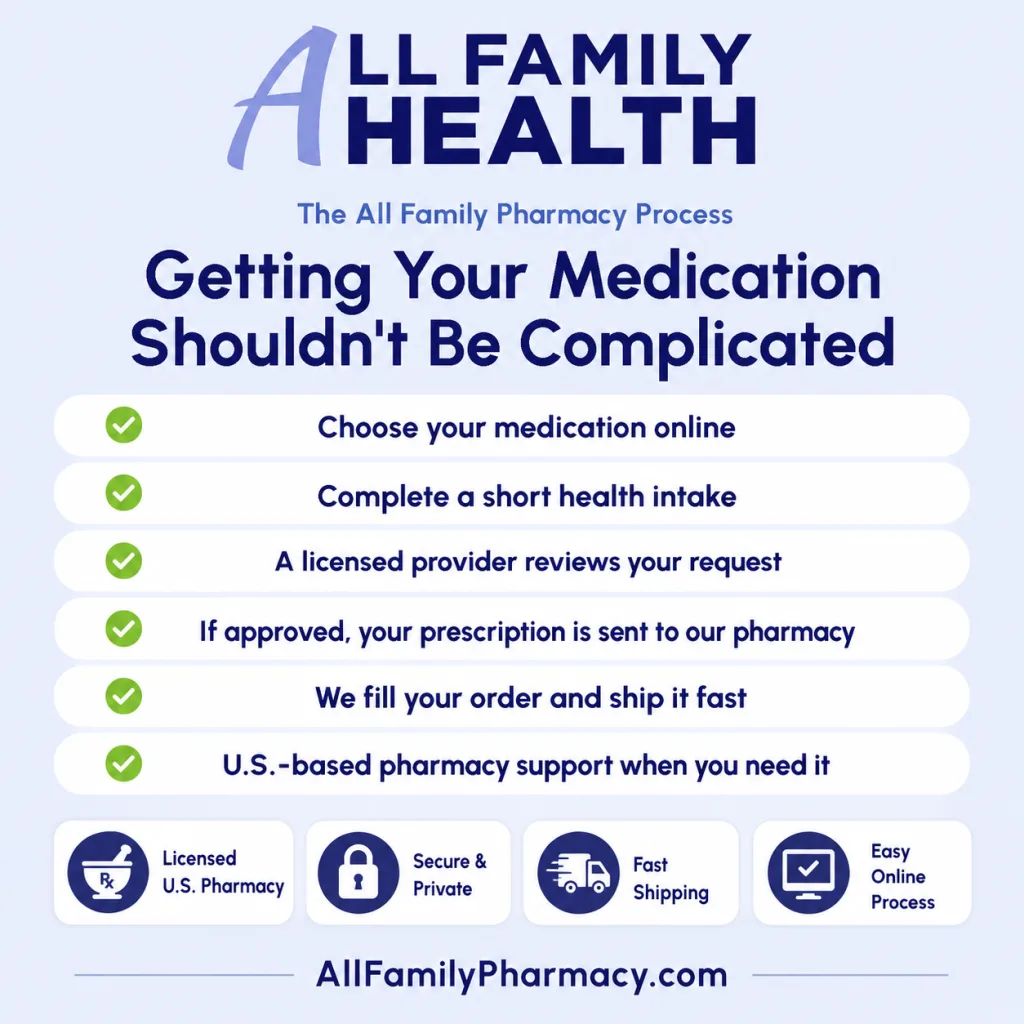
How It Works
- Step 1Choose TreatmentSelect your treatment and quantity.
- Step 2Complete Health QuestionsAnswer a brief medical intake.
- Step 3Provider ReviewA licensed provider reviews your information.
- Step 4Pharmacy ShipsIf approved, your prescription is filled and shipped.
What patients say
“So far very easy to use and good explanation”
“I LOVE being able to order online prescriptions as needed.”
“I have used All Family Health many times and have never been disappointed. They offer great service and great products.”
“Professional and secure. Safe and efficient process. Thank you!”
“Great Pricing and a great product”
“My order was very easy. Thank you.”
“Very easy to navigate the site”
“Prompt, professional organization.”
“Everything was so simple to do,I can't not be more happy with your business 😁”
“I'm happy I was able to get what I was looking for”
- A one-time provider review fee is added once per order, not per medication
- Transparent pricing with no surprise fees
- Packed and shipped in plain, unmarked packaging
- You only pay if a provider approves your order
- Eligible for HSA and FSA
Your Treatment Option
+ $30 provider review & $10 shipping
Refill up to 3 times without a new visit — fast processing.
- Estimated delivery: Mon–Tue, Nov 23–24
See price breakdown
- Step 1Choose TreatmentSelect your treatment and quantity.
- Step 2Complete Health QuestionsAnswer a brief medical intake.
- Step 3Provider ReviewA licensed provider reviews your information.
- Step 4Pharmacy ShipsIf approved, your prescription is filled and shipped.
Choosing and Using Your Treatment
| Treatment | Choose this if… | How to Take |
|---|---|---|
| Naloxone HCL Nasal Spray 4mg | For anyone who takes prescription opioids or may witness an opioid overdose and wants emergency reversal medication on hand. | Administer 1 spray (4mg) into one nostril at the first sign of opioid overdose; may repeat every 2 to 3 minutes in alternating nostrils until emergency help arrives. |
What is Overdose Treatment?
Also called: Accidental drug overdose
A drug overdose occurs when a toxic amount of a drug, or a combination of drugs, overwhelms the body's normal functions. Overdoses can be accidental — such as a medication dosing error, mixing drugs with alcohol, or unknowingly taking a substances. Opioids are involved in the majority of U.S. overdose deaths, and they kill by slowing breathing until it stops. Many overdose deaths are preventable when someone nearby recognizes the signs, calls 911, and administers naloxone if opioids may be involved. Keeping naloxone accessible is recommended for anyone who takes prescription opioids or has a friend or family member at risk.
Common symptoms
- Slow, shallow, or stopped breathing
- Unresponsiveness — the person cannot be woken by voice or touch
- Pinpoint (very small) pupils, a classic sign of opioid overdose
- Blue, gray, or pale lips, fingertips, or skin
- Gurgling, snoring, or choking sounds
- Confusion, extreme drowsiness, or loss of consciousness
- Seizures, chest pain, or a dangerously fast heartbeat (more common with stimulants)
Causes & risk factors
- Accidental drug overdose from taking too much of a prescription or over-the-counter medicine
- Reduced tolerance after a period of not using, such as after detox or incarceration
- Medication errors in children and older adults, including double-dosing
- Intentional overdose related to a mental health crisis
- Using drugs alone, where no one is present to respond or call for help
Treatment options for Overdose Treatment
Compare the medications offered on this page. Your provider will choose the right one for you based on your answers.
Naloxone HCL Nasal Spray 4mg
from $85Opioid antagonist
- Good choice if
- For anyone who takes prescription opioids or may witness an opioid overdose and wants emergency reversal medication on hand.
- Typical dosing
- Administer 1 spray (4mg) into one nostril at the first sign of opioid overdose; may repeat every 2 to 3 minutes in alternating nostrils until emergency help arrives.
Prices are for the medication only. Provider review and shipping are shown at checkout.
When to see a doctor in person
If you believe someone is overdosing right now — they are unresponsive, breathing slowly or not at all, or turning blue — call 911 immediately, give naloxone if opioids may be involved, and stay with the person until help arrives. Online care is not appropriate for an active overdose. Where online care does fit is prevention and preparedness: after a brief provider review, you can obtain naloxone nasal spray to keep at home, and you can discuss safer medication use if you take prescription opioids. If you or a loved one is struggling with substance use or having thoughts of self-harm, contact your doctor, call or text the 988 Suicide & Crisis Lifeline, or go to the nearest emergency department.
Prevention & self-care
- Keep naloxone (Narcan) on hand if you or someone in your household uses opioids
- Take all medications exactly as prescribed and never share prescriptions
- Never mix opioids with alcohol, sleep aids, or anti-anxiety medications unless a provider approves
- Store medications locked and out of reach of children and teens
- Dispose of unused or expired medications through a drug take-back program
- Avoid using drugs alone, and tell someone who can check on you
- Seek treatment for substance use disorder — effective medications and counseling exist
Overdose Treatment FAQ
What is a drug overdose?
A drug overdose is when a person takes a toxic amount of a drug — prescription, over-the-counter, or illicit — that overwhelms the body. Overdoses can be accidental or intentional, and severity ranges from mild symptoms to coma and death. Any suspected overdose should be treated as a medical emergency.
What happens during a drug overdose?
What happens depends on the drug. In an opioid overdose, breathing slows and can stop, cutting off oxygen to the brain within minutes. Stimulant overdoses can cause seizures, dangerously high body temperature, heart attack, or stroke. In all cases, brain and organ damage can occur quickly, which is why calling 911 right away matters.
How many people died from drug overdose 2024?
According to CDC provisional data, roughly 80,000 people died from drug overdoses in the United States in 2024. That represents a significant decline from over 107,000 deaths in 2023, the largest one-year drop on record. Synthetic opioids remain the leading driver of overdose deaths.
Which of the following may indicate a potential drug overdose?
Key warning signs include unresponsiveness, slow or stopped breathing, pinpoint pupils, blue or gray lips or fingertips, gurgling or choking sounds, and cold or clammy skin. Seizures, chest pain, and extreme agitation can indicate a stimulant overdose. If you observe any of these signs, call 911 immediately.
What does a drug overdose look like?
A person overdosing on opioids typically appears limp and unresponsive, with very slow or absent breathing, tiny pupils, and pale or bluish skin. They may make gurgling or snoring sounds. A stimulant overdose can look very different — agitation, racing heart, sweating, and seizures. When in doubt, treat it as an emergency.
What is the drug used to treat an opioid overdose?
Naloxone (brand name Narcan) is the medication used to rapidly reverse an opioid overdose. It works within minutes by blocking opioid receptors and restoring breathing. Naloxone is available as a nasal spray, is safe to give even if you are not sure opioids are involved, and does not replace the need to call 911.
Does life insurance cover drug overdose?
Coverage depends on the specific policy and circumstances. Many policies pay benefits for accidental overdose deaths, but claims may be denied if the death was intentional within a contestability period or if drug use was misrepresented on the application. Review your policy documents or speak with the insurer for specifics.
Opioid vs. Stimulant Overdose: Knowing the Difference
Different drug classes cause different overdose symptoms. Recognizing the pattern can help you describe the emergency to 911 dispatchers and decide whether naloxone may help.
| Sign | Opioid Overdose | Stimulant Overdose |
|---|---|---|
| Breathing | Slow, shallow, or stopped | Rapid or labored |
| Pupils | Pinpoint (very small) | Dilated (large) |
| Behavior | Unresponsive, limp | Agitated, paranoid, seizures |
| Naloxone helps? | Yes — give it right away | Not directly, but safe to give if opioids might also be involved |
Why keep naloxone at home?
- Counterfeit pills and other street drugs could be contaminated, making accidental opioid overdose possible even for people who do not intend to use opioids.
- Naloxone is safe, works only on opioids, and causes no harm if opioids are not present.
- Most overdose deaths occur at home, and minutes matter — having naloxone nearby can bridge the gap until EMS arrives.
Naloxone is not a substitute for emergency care. Always call 911 first, then administer naloxone and stay with the person.