
Order Pink Eye Treatment Online
Commonly treated with Polymyxin B-Trimethoprim, Erythromycin Ointment & Moxifloxacin
Medication as Low as $20.00


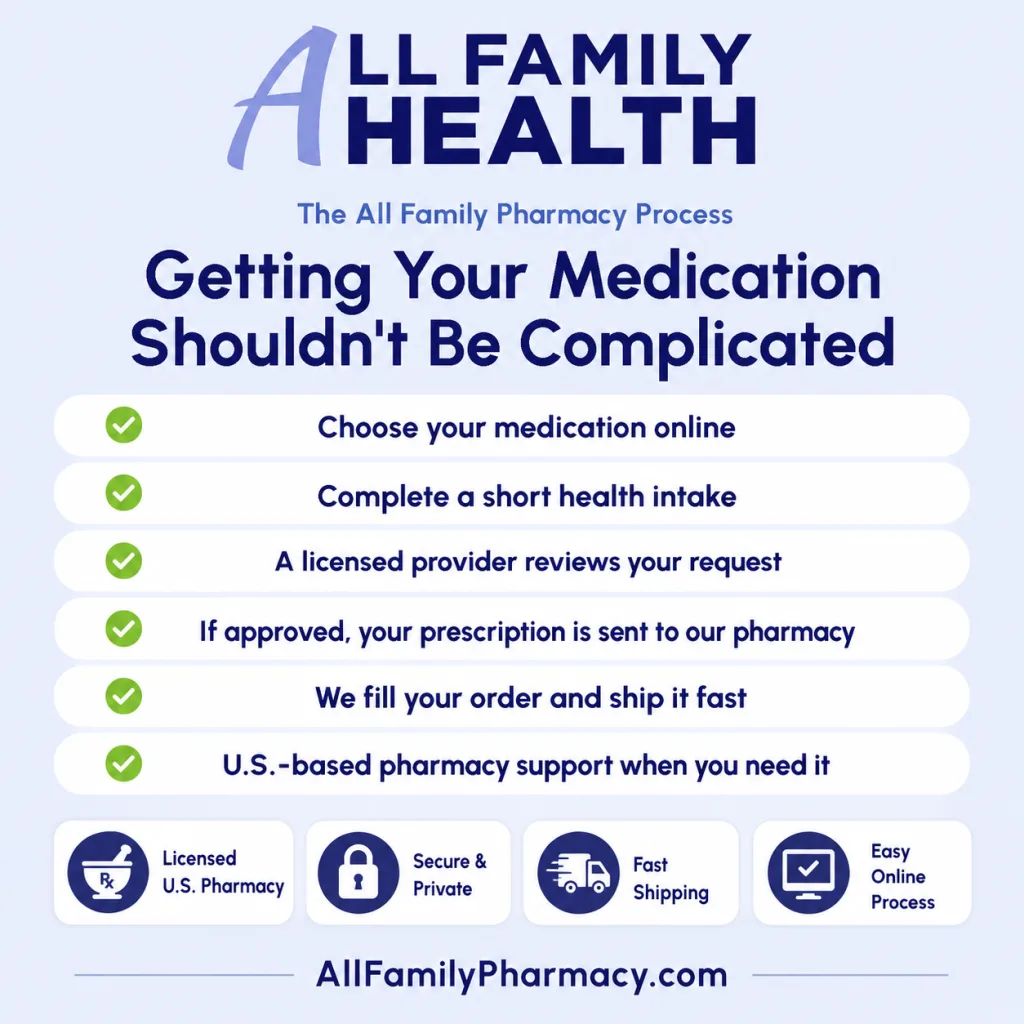
How It Works
- Step 1Choose TreatmentSelect your treatment and quantity.
- Step 2Complete Health QuestionsAnswer a brief medical intake.
- Step 3Provider ReviewA licensed provider reviews your information.
- Step 4Pharmacy ShipsIf approved, your prescription is filled and shipped.
What patients say
“So far very easy to use and good explanation”
“I LOVE being able to order online prescriptions as needed.”
“I have used All Family Health many times and have never been disappointed. They offer great service and great products.”
“Professional and secure. Safe and efficient process. Thank you!”
“Great Pricing and a great product”
“My order was very easy. Thank you.”
“Very easy to navigate the site”
“Prompt, professional organization.”
“Everything was so simple to do,I can't not be more happy with your business 😁”
“I'm happy I was able to get what I was looking for”
- A one-time provider review fee is added once per order, not per medication
- Transparent pricing with no surprise fees
- Packed and shipped in plain, unmarked packaging
- You only pay if a provider approves your order
- Eligible for HSA and FSA
Choose Your Treatment *
+ $30 provider review & $10 shipping
+ $30 provider review & $10 shipping
+ $30 provider review & $10 shipping
+ $30 provider review & $10 shipping
- Medication$25
- Provider review$30
- Shipping$10
- Total$65
Only charged if approved
Need another? Add more above — one $30 review + $10 shipping per order.
✓ In your cart
- Estimated delivery: Mon–Tue, Nov 23–24
See price breakdown
Estimated delivery: Mon–Tue, Nov 23–24
Refills at provider discretion.
- Step 1Choose TreatmentSelect your treatment and quantity.
- Step 2Complete Health QuestionsAnswer a brief medical intake.
- Step 3Provider ReviewA licensed provider reviews your information.
- Step 4Pharmacy ShipsIf approved, your prescription is filled and shipped.
Choosing and Using Your Treatment
| Treatment | Choose this if… | How to Take |
|---|---|---|
| Polymyxin B Sulfate and Trimethoprim Ophthalmic Solution | A common first-line antibiotic eye drop for bacterial pink eye in adults and children. | Instill 1 drop into the affected eye(s) every 3 hours while awake, up to 6 times daily, for 7 days. |
| Erythromycin Ophth 0.5% Ointment | An antibiotic ointment option for those who have trouble using eye drops or prefer nighttime application. | Apply a 1 cm ribbon into the affected eye(s) 4 times daily for 7 days. |
| Moxifloxacin HCL Ophth 0.5% | A broad-spectrum fluoroquinolone drop with convenient three-times-daily dosing, often preferred for contact lens wearers after provider evaluation. | Instill 1 drop into the affected eye(s) 3 times daily for 7 days. |
| Tobramycin Ophth Solution 0.3% | An aminoglycoside antibiotic drop alternative for bacterial conjunctivitis. | Instill 1 drop into the affected eye(s) every 4 hours for 7 days. |
What is Pink Eye?
Also called: Conjunctivitis
Pink eye is one of the most common eye conditions in both children and adults. It happens when the conjunctiva — the thin membrane lining the eye and eyelid — becomes irritated or infected, making the blood vessels more visible and giving the eye a pink or reddish appearance. Most cases are caused by viruses or bacteria, both of which are highly contagious, while allergic conjunctivitis is triggered by pollen, dust, or other allergens and is not contagious. Viral pink eye usually clears on its own within one to two weeks, while bacterial pink eye may improve faster with prescription antibiotic eye drops or ointment. Allergic pink eye typically affects both eyes and improves with allergy management and lubricating artificial tears. Because different types of pink eye are treated differently, a provider review helps match you with the right approach.
Common symptoms
- Pink or red color in the white of one or both eyes
- Itchy, gritty, or burning feeling in the eye
- Watery eyes or thick discharge that can crust overnight
- Swollen or puffy eyelids
- Increased sensitivity to light
- Blurry vision that clears with blinking
- Feeling like something is stuck in the eye
Causes & risk factors
- Viral infections, often alongside a cold or respiratory illness
- Bacterial infections spread by hand-to-eye contact
- Allergens such as pollen or dust mites (pink eye vs allergies can look similar)
- Irritants like smoke, chlorine, or foreign objects in the eye
- Wearing contact lenses too long or without proper cleaning
- Sharing towels, pillowcases, or eye makeup with an infected person
Treatment options for Pink Eye
Compare the medications offered on this page. Your provider will choose the right one for you based on your answers.
Ophthalmic antibiotic combination
- Good choice if
- A common first-line antibiotic eye drop for bacterial pink eye in adults and children.
- Typical dosing
- Instill 1 drop into the affected eye(s) every 3 hours while awake, up to 6 times daily, for 7 days.
Erythromycin Ophth 0.5% Ointment
from $30Macrolide antibiotic (ophthalmic)
- Good choice if
- An antibiotic ointment option for those who have trouble using eye drops or prefer nighttime application.
- Typical dosing
- Apply a 1 cm ribbon into the affected eye(s) 4 times daily for 7 days.
Moxifloxacin HCL Ophth 0.5%
from $20Fluoroquinolone antibiotic (ophthalmic)
- Good choice if
- A broad-spectrum fluoroquinolone drop with convenient three-times-daily dosing, often preferred for contact lens wearers after provider evaluation.
- Typical dosing
- Instill 1 drop into the affected eye(s) 3 times daily for 7 days.
Tobramycin Ophth Solution 0.3%
from $25Aminoglycoside antibiotic (ophthalmic)
- Good choice if
- An aminoglycoside antibiotic drop alternative for bacterial conjunctivitis.
- Typical dosing
- Instill 1 drop into the affected eye(s) every 4 hours for 7 days.
Prices are for the medication only. Provider review and shipping are shown at checkout.
When to see a doctor in person
An online visit is a good fit for mild to moderate pink eye symptoms — redness, discharge, and irritation without vision changes — where a provider can review your history and prescribe antibiotic drops or ointment if a bacterial infection is likely. Seek in-person or urgent care if you have moderate to severe eye pain, significant light sensitivity, blurred vision that does not clear with blinking, intense redness, symptoms in a newborn, a weakened immune system, a recent eye injury, or if you wear contact lenses and develop pain — contact lens wearers are at higher risk for serious corneal infections. Also see a provider in person if symptoms worsen or do not improve after several days of treatment.
Prevention & self-care
- Wash your hands often with soap and water
- Avoid touching or rubbing your eyes
- Do not share towels, washcloths, pillowcases, or eye makeup
- Clean and replace contact lenses as directed, and avoid wearing them during infection
- Wash bedding and towels in hot water if someone in your home has pink eye
- Replace eye makeup used during an infection to avoid reinfection
Pink Eye FAQ
What is pink eye?
Pink eye, also called conjunctivitis, is inflammation of the conjunctiva — the clear membrane covering the white of the eye and inner eyelids. It makes tiny blood vessels more visible, turning the eye pink or red. It can be caused by viruses, bacteria, allergens, or irritants.
How do you get pink eye?
Viral and bacterial pink eye spread easily through direct contact with an infected person's eye discharge, contaminated hands, towels, pillowcases, or makeup. Viral pink eye often accompanies a cold or respiratory infection. Allergic pink eye is not contagious and is triggered by allergens like pollen or dust.
Is pink eye contagious?
Viral and bacterial pink eye are both highly contagious, spreading through eye discharge and contaminated hands or surfaces. Allergic and irritant-related pink eye are not contagious. Frequent handwashing and avoiding shared towels or makeup help limit spread.
How long does pink eye last?
Viral pink eye typically lasts one to two weeks and clears on its own. Bacterial pink eye often improves within a few days of starting antibiotic drops or ointment, though mild cases may resolve without treatment. Allergic pink eye lasts as long as you are exposed to the allergen.
How long is pink eye contagious?
Viral pink eye can be contagious for as long as symptoms last, often up to two weeks. Bacterial pink eye is generally considered contagious until 24 hours after starting antibiotic treatment, or until discharge stops if untreated. Good hand hygiene reduces the risk of spreading it either way.
Does pink eye hurt?
Pink eye usually causes irritation, itching, burning, or a gritty feeling rather than significant pain. Moderate to severe eye pain is not typical and can signal a more serious problem, such as a corneal infection or injury. If you have real eye pain, light sensitivity, or vision changes, seek in-person care promptly.
What is commonly misdiagnosed as pink eye?
Conditions that can mimic pink eye include allergies, dry eye, blepharitis (eyelid inflammation), a stye, corneal abrasions, and more serious issues like keratitis, uveitis, or acute glaucoma. That is why a provider review matters — especially if symptoms include pain, vision changes, or do not improve with treatment.
How to treat pink eye?
Treatment depends on the cause. Bacterial pink eye may be treated with prescription antibiotic eye drops or ointment, while viral pink eye usually resolves on its own with supportive care like cool compresses and artificial tears. Allergic pink eye improves with allergen avoidance, lubricating drops, and allergy medications.
Pink Eye vs. Allergies: How to Tell the Difference
Different types of pink eye look similar but are treated differently. This comparison can help, though only a provider can confirm the cause.
| Feature | Viral | Bacterial | Allergic |
|---|---|---|---|
| Discharge | Watery, clear | Thick, yellow-green, crusting | Watery, stringy |
| Eyes affected | Often starts in one, may spread | One or both | Usually both |
| Main sensation | Gritty, burning | Irritation, sticky lids | Intense itching |
| Contagious | Yes | Yes | No |
While You Recover
- Use a clean, cool compress on closed eyes to ease irritation.
- Lubricating artificial tears may soothe symptoms for any type of pink eye.
- Stop wearing contact lenses until symptoms fully resolve, and discard the pair worn during infection.
- Wash hands after touching your eyes and use a fresh towel each day.
- Antibiotic drops help only bacterial pink eye — they do not treat viral or allergic causes.