
Order Rosacea Treatment Online
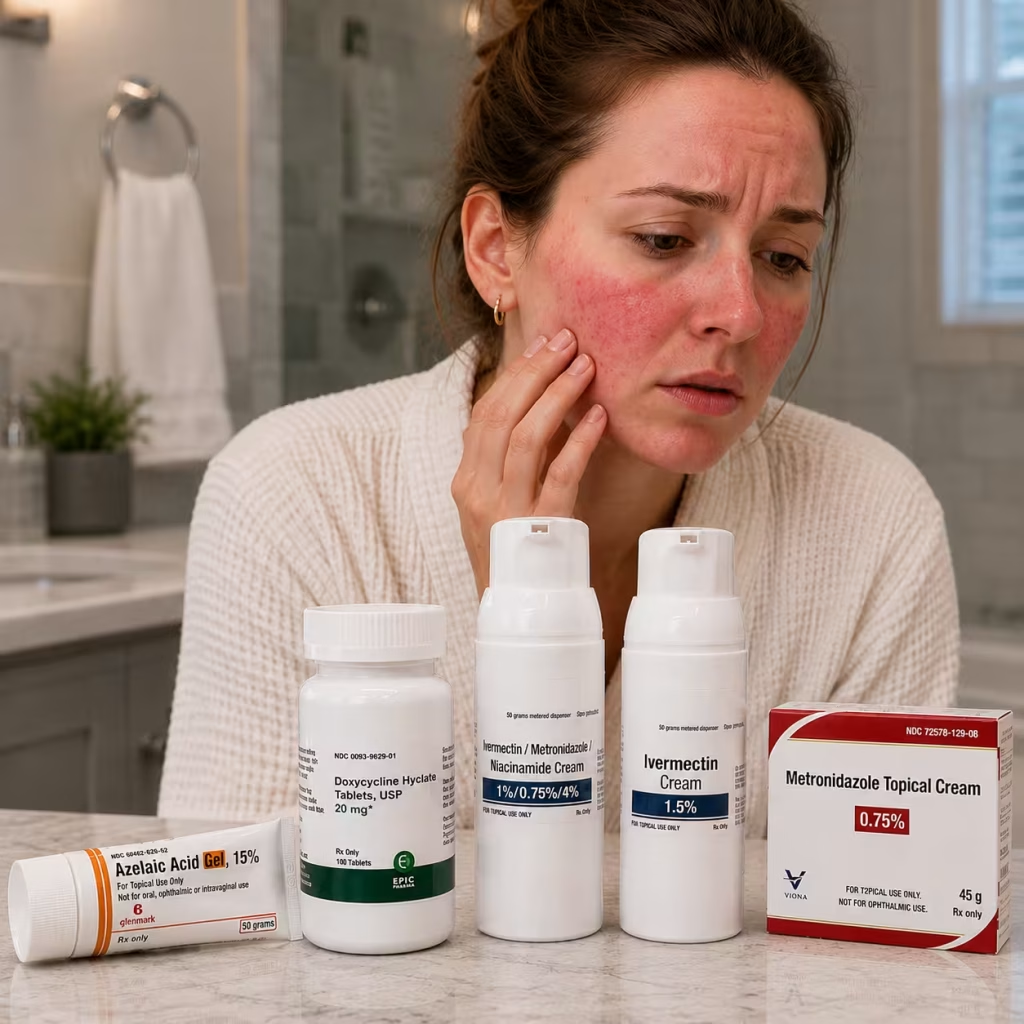
Commonly treated with Metronidazole, Ivermectin Cream (the active in Soolantra), Azelaic Acid & Doxycycline
Medication as Low as $25.00


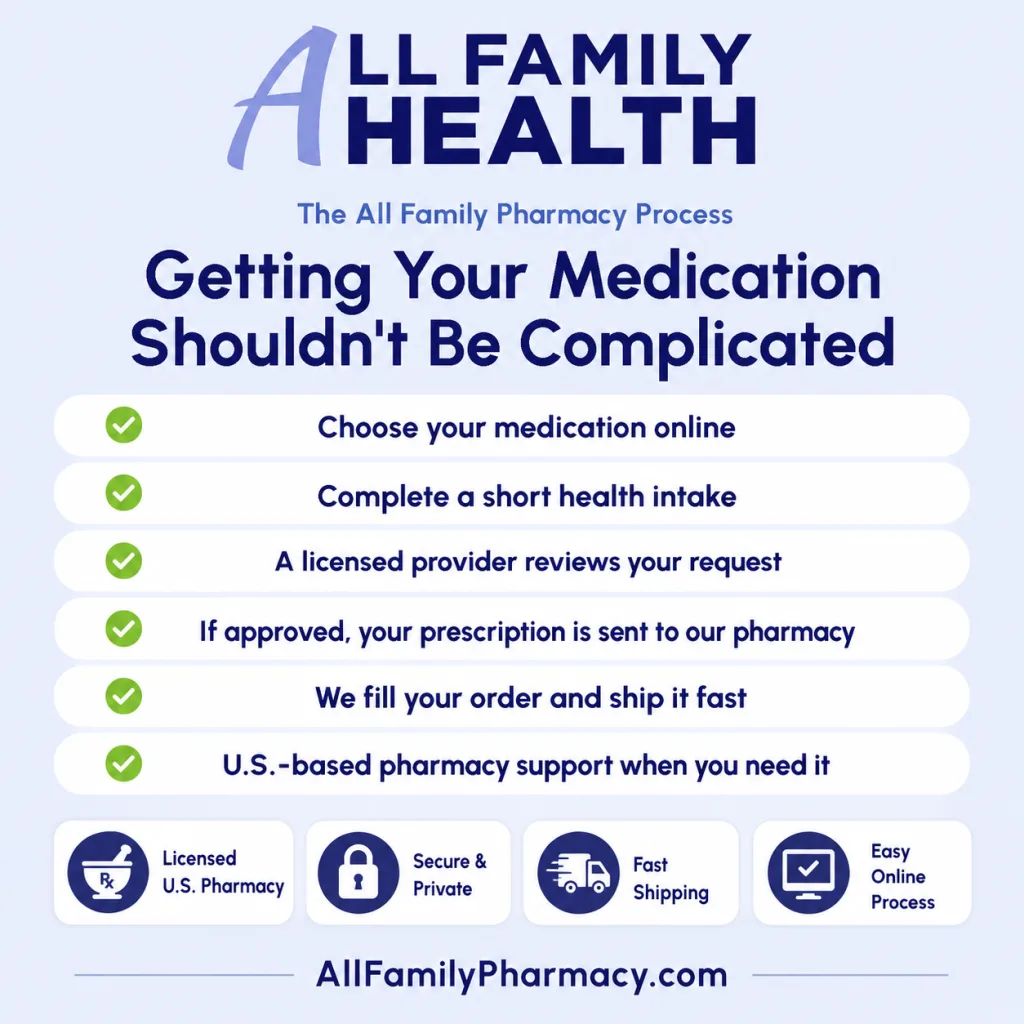
How It Works
- Step 1Choose TreatmentSelect your treatment and quantity.
- Step 2Complete Health QuestionsAnswer a brief medical intake.
- Step 3Provider ReviewA licensed provider reviews your information.
- Step 4Pharmacy ShipsIf approved, your prescription is filled and shipped.
What patients say
“So far very easy to use and good explanation”
“I LOVE being able to order online prescriptions as needed.”
“I have used All Family Health many times and have never been disappointed. They offer great service and great products.”
“Professional and secure. Safe and efficient process. Thank you!”
“Great Pricing and a great product”
“My order was very easy. Thank you.”
“Very easy to navigate the site”
“Prompt, professional organization.”
“Everything was so simple to do,I can't not be more happy with your business 😁”
“I'm happy I was able to get what I was looking for”
- A one-time provider review fee is added once per order, not per medication
- Transparent pricing with no surprise fees
- Packed and shipped in plain, unmarked packaging
- You only pay if a provider approves your order
- Eligible for HSA and FSA
Choose Your Treatment *
+ $30 provider review & $10 shipping
Refill up to 3 times without a new visit — fast processing.
+ $30 provider review & $10 shipping
Refill up to 3 times without a new visit — fast processing.
+ $30 provider review & $10 shipping
Refill up to 3 times without a new visit — fast processing.
+ $30 provider review & $10 shipping
Refill up to 3 times without a new visit — fast processing.
+ $30 provider review & $10 shipping
Refill up to 3 times without a new visit — fast processing.
- Medication$80
- Provider review$30
- Shipping$10
- Total$120
Only charged if approved
Need another? Add more above — one $30 review + $10 shipping per order.
✓ In your cart
- Estimated delivery: Mon–Tue, Nov 23–24
See price breakdown
Refill up to 3 times without a new visit — fast processing.
Estimated delivery: Mon–Tue, Nov 23–24
- Step 1Choose TreatmentSelect your treatment and quantity.
- Step 2Complete Health QuestionsAnswer a brief medical intake.
- Step 3Provider ReviewA licensed provider reviews your information.
- Step 4Pharmacy ShipsIf approved, your prescription is filled and shipped.
Choosing and Using Your Treatment
| Treatment | Choose this if… | How to Take |
|---|---|---|
| Ivermectin 1% / Metronidazole 0.75% / Niacinamide 4% Cream | you have both bumps and redness and prefer a once-daily, topical-only routine — ivermectin targets skin mites and inflammation, metronidazole calms redness, and niacinamide strengthens sensitive skin. | Apply 1 pump (1 mL) as a thin layer to the affected areas of the face once daily, preferably in the evening, or as directed by the provider. |
| Metronidazole 0.75% Topical Cream | A well-established first-line topical for the redness and bumps of mild to moderate rosacea. Often combined with low-dose oral doxycycline for moderate papulopustular rosacea. | Apply a thin layer to the affected areas of the face twice daily. |
| Ivermectin 1.5% Cream | Suits inflammatory bumps and pimples, especially when Demodex mites may contribute. Contains the same active ingredient as brand Soolantra, at a higher 1.5% strength. | Apply a thin layer to the affected areas of the face once daily, preferably in the evening. |
| Azelaic Acid 15% Gel | A good option for both redness and bumps, including for those who prefer an antibiotic-free topical. | Apply a thin layer to the affected areas of the face twice daily. |
| Doxycycline Hyclate 20mg | Low-dose oral therapy for moderate papulopustular rosacea, often added to a topical treatment. Commonly paired with metronidazole cream for faster and more complete clearing of bumps. | Take 2 tablets by mouth once daily. |
What is Rosacea?
Also called: Acne rosacea
Rosacea is a chronic inflammatory skin condition that mainly affects the central face — the cheeks, nose, chin, and forehead. It typically begins with a tendency to flush or blush easily, and over time the redness can become more persistent, sometimes with small visible blood vessels, swelling, or acne-like pimples (a form called papulopustular rosacea). Some people also develop ocular rosacea, which causes dry, irritated, red eyes and swollen eyelids. Rosacea most often appears in adults between 30 and 50, and it is more visible in people with fair skin, though it affects all skin tones. Symptoms tend to come and go in cycles, flaring for weeks to months before easing. It is not contagious and is not caused by poor hygiene, and with consistent treatment and trigger avoidance most people manage it well.
Common symptoms
- Persistent redness across the cheeks, nose, chin, or forehead
- Frequent flushing or blushing that lasts longer than normal
- Acne-like bumps and pus-filled pimples (papulopustular rosacea)
- Small visible blood vessels on the face (spider veins)
- Burning, stinging, or sensitive skin on the face
- Dry, irritated, or watery eyes and swollen eyelids (ocular rosacea)
- Thickened skin, most often on the nose, in advanced cases
Causes & risk factors
- The exact cause of rosacea is unknown; it involves an overactive inflammatory response in the skin
- Genetics — rosacea often runs in families
- An overreaction to Demodex mites that naturally live on facial skin
- Abnormal blood vessel responses that make facial flushing easier to trigger
- Triggers such as sun exposure, heat, wind, and cold weather
- Spicy foods, hot drinks, and alcohol, which can provoke flares
- Stress, exercise, and certain skin care products or medications that dilate blood vessels
Treatment options for Rosacea
Compare the medications offered on this page. Your provider will choose the right one for you based on your answers.
Topical antiparasitic / antibiotic combination
- Good choice if
- you have both bumps and redness and prefer a once-daily, topical-only routine — ivermectin targets skin mites and inflammation, metronidazole calms redness, and niacinamide strengthens sensitive skin.
- Typical dosing
- Apply 1 pump (1 mL) as a thin layer to the affected areas of the face once daily, preferably in the evening, or as directed by the provider.
Topical nitroimidazole antibiotic
- Good choice if
- A well-established first-line topical for the redness and bumps of mild to moderate rosacea. Often combined with low-dose oral doxycycline for moderate papulopustular rosacea.
- Typical dosing
- Apply a thin layer to the affected areas of the face twice daily.
Ivermectin 1.5% Cream
from $70Topical antiparasitic agent
- Good choice if
- Suits inflammatory bumps and pimples, especially when Demodex mites may contribute. Contains the same active ingredient as brand Soolantra, at a higher 1.5% strength.
- Typical dosing
- Apply a thin layer to the affected areas of the face once daily, preferably in the evening.
Azelaic Acid 15% Gel
from $50Topical dicarboxylic acid
- Good choice if
- A good option for both redness and bumps, including for those who prefer an antibiotic-free topical.
- Typical dosing
- Apply a thin layer to the affected areas of the face twice daily.
Doxycycline Hyclate 20mg
from $40Tetracycline (low-dose, anti-inflammatory)
- Good choice if
- Low-dose oral therapy for moderate papulopustular rosacea, often added to a topical treatment. Commonly paired with metronidazole cream for faster and more complete clearing of bumps.
- Typical dosing
- Take 2 tablets by mouth once daily.
Prices are for the medication only. Provider review and shipping are shown at checkout.
When to see a doctor in person
Online treatment is a good fit if you have mild to moderate rosacea with typical facial redness and acne-like bumps, or if you have been diagnosed before and need to restart or continue therapy. See a doctor or dermatologist in person if your rash is new and undiagnosed — other conditions such as lupus, eczema, or acne can look similar and may need an exam or testing. Seek prompt in-person care for eye involvement (persistent eye redness, pain, light sensitivity, or vision changes), rapidly worsening or painful skin, thickening of the nose, or a facial rash accompanied by fever, joint pain, or feeling generally unwell.
Prevention & self-care
- Wear a broad-spectrum SPF 30+ sunscreen daily — sun is the most common trigger
- Identify and avoid your personal triggers, such as alcohol, spicy foods, or hot beverages
- Use gentle, fragrance-free cleansers and moisturizers; avoid harsh scrubs and astringents
- Protect your face from extreme heat, cold, and wind
- Manage stress, which is a frequent flare trigger
- Stay consistent with prescribed maintenance treatment even when skin is clear
- Keep a symptom diary to spot patterns before flares worsen
Rosacea FAQ
Do you carry Soolantra (ivermectin cream)?
We don't sell the Soolantra® brand itself, but we offer compounded ivermectin creams with the same active ingredient — a 1.5% cream and a 1% combination cream with metronidazole and niacinamide. Both are prescription treatments reviewed by a licensed provider through a quick online consult, typically at a fraction of the brand's cash price, with 3 refills included.
What is rosacea?
Rosacea is a chronic inflammatory skin condition that causes redness, flushing, visible blood vessels, and sometimes acne-like bumps on the central face. It typically appears in adults over 30 and tends to flare and calm in cycles. It is manageable with prescription treatment and trigger avoidance.
What causes rosacea?
The exact cause isn't fully understood. It appears to involve a combination of genetics, an overactive immune response in the skin, reactive blood vessels, and possibly an overreaction to Demodex mites that normally live on facial skin. Triggers like sun, heat, alcohol, spicy food, and stress can set off flares but do not cause the underlying condition.
How to get rid of rosacea permanently?
There is currently no permanent cure for rosacea. However, prescription treatments such as topical metronidazole, ivermectin cream, azelaic acid, and low-dose oral doxycycline can substantially reduce redness and bumps. Most people achieve good long-term control with consistent treatment and by avoiding their personal triggers.
Does rosacea itch?
Rosacea is more often described as burning, stinging, or sensitive rather than itchy, though some people do experience mild itching. Intense itching may suggest a different condition, such as eczema or an allergic reaction, so persistent itch is worth discussing with a provider.
Is rosacea autoimmune?
Rosacea is not classified as an autoimmune disease. It is considered a chronic inflammatory condition involving the skin's immune system, blood vessels, and possibly skin mites. Some research shows associations between rosacea and certain autoimmune conditions, but rosacea itself does not attack the body the way autoimmune diseases do.
Is rosacea contagious?
No. Rosacea cannot be spread by skin contact, sharing towels, or any other means. It is an inflammatory condition of your own skin, not an infection you can pass to others.
Is rosacea genetic?
Genetics appear to play a significant role. Rosacea often runs in families, and people with fair skin of Northern European ancestry have higher rates. Having a relative with rosacea increases your likelihood of developing it, though environment and triggers also matter.
What is the best prescription cream for rosacea?
There is no single best cream — the right choice depends on your symptoms. Metronidazole cream or gel, ivermectin 1% cream, and azelaic acid 15% gel are all standard first-line topical treatments for the bumps and redness of rosacea. A licensed provider can help select the option that fits your skin and symptom pattern.
Types of Rosacea
Rosacea shows up differently from person to person, and many people have features of more than one type. Knowing your pattern helps guide treatment.
| Type | What it looks like |
|---|---|
| Erythematotelangiectatic | Persistent facial redness, flushing, and small visible blood vessels. |
| Papulopustular rosacea | Acne-like bumps and pus-filled pimples on a background of redness — sometimes called acne rosacea. |
| Ocular rosacea | Red, dry, irritated eyes and swollen eyelids; needs an in-person eye evaluation if persistent. |
| Phymatous | Skin thickening, most often on the nose (rhinophyma); usually managed by a dermatologist. |
Lupus Rash vs. Rosacea: How to Tell the Difference
Both conditions can cause redness across the cheeks and nose, so they are sometimes confused. There are important differences:
- Pimples: Rosacea often includes acne-like bumps and pustules; the classic lupus butterfly (malar) rash does not.
- Pattern: The lupus rash typically spares the folds between the nose and cheeks, while rosacea often involves them along with the chin and forehead.
- Whole-body symptoms: Lupus usually comes with fatigue, joint pain, fever, or mouth sores; rosacea is limited to the skin and eyes.
- Course: Rosacea flares with triggers like heat, alcohol, or spicy food; a lupus rash often flares sharply after sun exposure alongside other symptoms.
If you have a new facial rash with joint pain, fever, or fatigue, see a doctor in person — blood tests may be needed to rule out lupus before starting rosacea treatment.