
Order Strep Throat Treatment Online
Commonly treated with Penicillin, Amoxicillin, Cephalexin & Azithromycin
Medication as Low as $18.00

How It Works
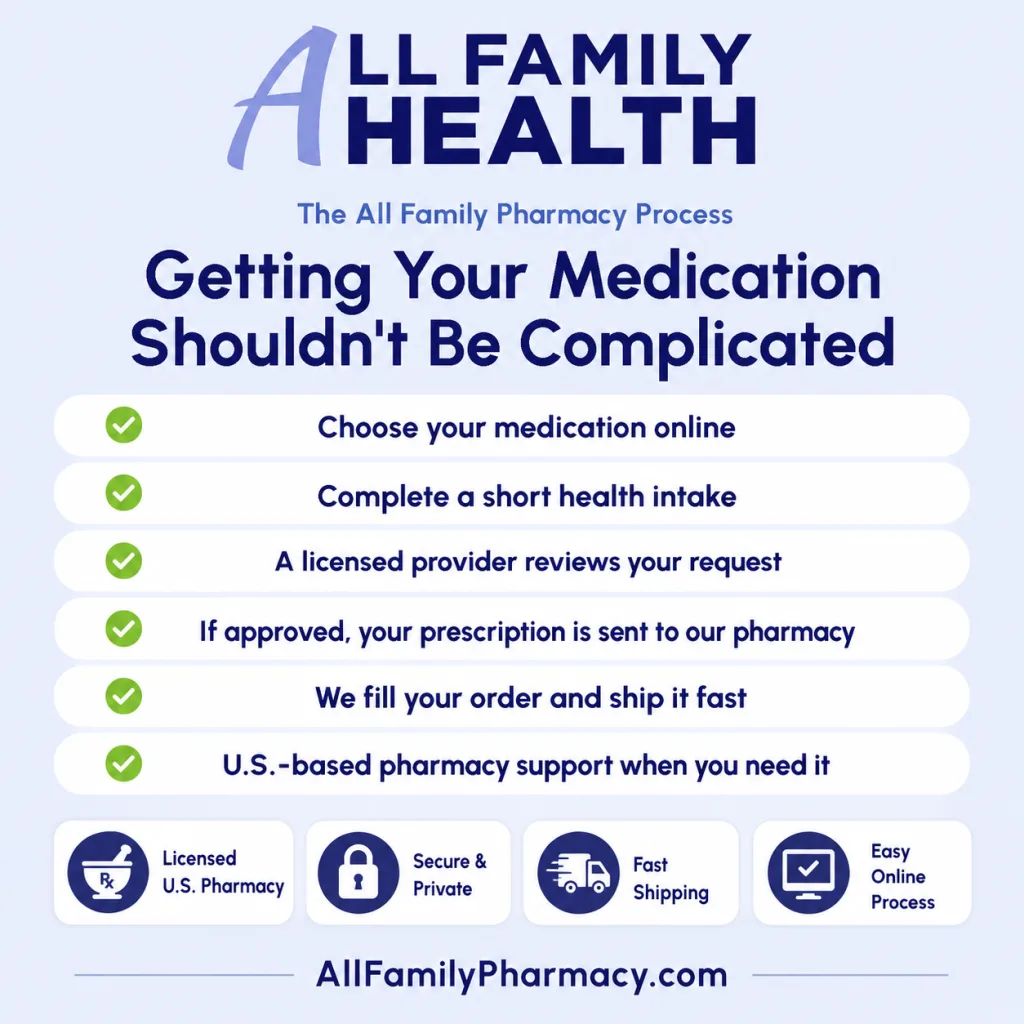
- Step 1Choose TreatmentSelect your treatment and quantity.
- Step 2Complete Health QuestionsAnswer a brief medical intake.
- Step 3Provider ReviewA licensed provider reviews your information.
- Step 4Pharmacy ShipsIf approved, your prescription is filled and shipped.
What patients say
“So far very easy to use and good explanation”
“I LOVE being able to order online prescriptions as needed.”
“I have used All Family Health many times and have never been disappointed. They offer great service and great products.”
“Professional and secure. Safe and efficient process. Thank you!”
“Great Pricing and a great product”
“My order was very easy. Thank you.”
“Very easy to navigate the site”
“Prompt, professional organization.”
“Everything was so simple to do,I can't not be more happy with your business 😁”
“I'm happy I was able to get what I was looking for”
- A one-time provider review fee is added once per order, not per medication
- Transparent pricing with no surprise fees
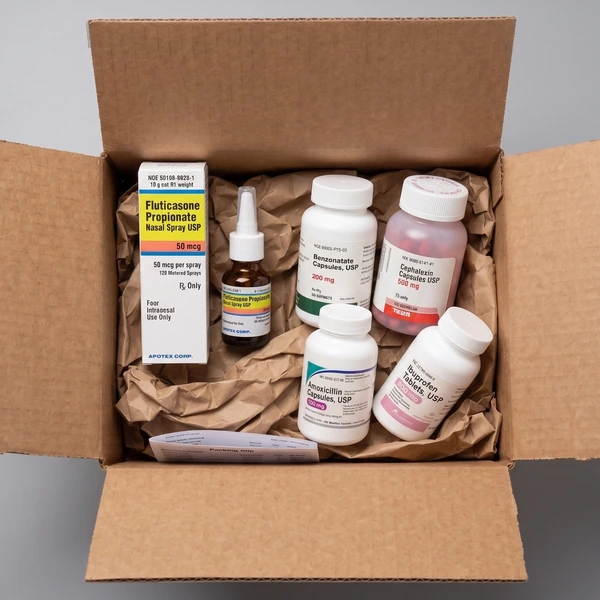
- Packed and shipped in plain, unmarked packaging
- You only pay if a provider approves your order
- Eligible for HSA and FSA
Choose Your Treatment *
+ $30 provider review & $10 shipping
+ $30 provider review & $10 shipping
+ $30 provider review & $10 shipping
Refill up to 3 times without a new visit — fast processing.
+ $30 provider review & $10 shipping
Refill up to 3 times without a new visit — fast processing.
+ $30 provider review & $10 shipping
Refill up to 3 times without a new visit — fast processing.
- Medication$25
- Provider review$30
- Shipping$10
- Total$65
Only charged if approved
Need another? Add more above — one $30 review + $10 shipping per order.
✓ In your cart
- Estimated delivery: Mon–Tue, Nov 23–24
See price breakdown
Estimated delivery: Mon–Tue, Nov 23–24
- Step 1Choose TreatmentSelect your treatment and quantity.
- Step 2Complete Health QuestionsAnswer a brief medical intake.
- Step 3Provider ReviewA licensed provider reviews your information.
- Step 4Pharmacy ShipsIf approved, your prescription is filled and shipped.
Choosing and Using Your Treatment
| Treatment | Choose this if… | How to Take |
|---|---|---|
| Amoxicillin 500mg | A first-line alternative to penicillin that is equally effective and often better tolerated. | Take 1 capsule by mouth twice daily for 10 days. |
| Cephalexin 500mg | Suits people with a mild, non-severe penicillin allergy (no history of anaphylaxis). | Take 1 capsule by mouth twice daily for 10 days. |
| Benzonatate 200mg Perles | If you have a persistent, bothersome dry cough and need short-term cough relief. | Take 1 capsule by mouth every 8 hours as needed for cough or sore throat. |
| Fluticasone Propionate 50mcg Nasal Spray | If you have nasal congestion, allergies, or postnasal drip causing throat irritation. | Spray 1-2 sprays in each nostril once daily. |
| Ibuprofen 800mg | Take 1 tablet by mouth every 8 hours as needed for pain. |
What is Strep throat?
Also called: Streptococcal pharyngitis
Strep throat, also called streptococcal pharyngitis, is an infection caused by group A Streptococcus bacteria. Unlike most sore throats, which are caused by viruses, strep throat responds to antibiotics. It is most common in children ages 5 to 15, but adults can get it too, especially parents and people who work around children. Typical signs include throat pain that comes on quickly, red and swollen tonsils (sometimes with white patches or streaks of pus), fever, and swollen lymph nodes in the neck. Strep throat usually does not cause cough or runny nose — those symptoms suggest a viral illness instead. A rapid strep test or throat culture is used to confirm the diagnosis, and prompt antibiotic treatment shortens illness, reduces spread, and helps prevent rare complications like rheumatic fever.
Common symptoms
- Sore throat that starts quickly and hurts when swallowing
- Red, swollen tonsils, sometimes with white patches or streaks of pus
- Tiny red spots on the roof of the mouth (petechiae)
- Fever, often 101°F or higher
- Swollen, tender lymph nodes in the front of the neck
- Headache, stomach pain, or nausea (more common in children)
- A fine, sandpaper-like rash (scarlet fever) in some cases
Causes & risk factors
- Infection with group A Streptococcus (Streptococcus pyogenes) bacteria
- Breathing in respiratory droplets when an infected person coughs or sneezes
- Touching a surface with droplets on it, then touching your nose or mouth
- Sharing food, drinks, or utensils with someone who is infected
- Close contact in crowded settings like schools, daycares, and households
- Contact with someone who carries the bacteria, even without symptoms
Treatment options for Strep throat
Compare the medications offered on this page. Your provider will choose the right one for you based on your answers.
Amoxicillin 500mg
from $25Penicillin-class antibiotic
- Good choice if
- A first-line alternative to penicillin that is equally effective and often better tolerated.
- Typical dosing
- Take 1 capsule by mouth twice daily for 10 days.
Cephalexin 500mg
from $25Cephalosporin antibiotic
- Good choice if
- Suits people with a mild, non-severe penicillin allergy (no history of anaphylaxis).
- Typical dosing
- Take 1 capsule by mouth twice daily for 10 days.
Benzonatate 200mg Perles
from $20Non-narcotic antitussive
- Good choice if
- If you have a persistent, bothersome dry cough and need short-term cough relief.
- Typical dosing
- Take 1 capsule by mouth every 8 hours as needed for cough or sore throat.
Intranasal corticosteroid
- Good choice if
- If you have nasal congestion, allergies, or postnasal drip causing throat irritation.
- How it works
- Works by reducing inflammation in the nasal passages caused by allergens like pollen, dust, and mold.
- Typical dosing
- Spray 1-2 sprays in each nostril once daily.
Ibuprofen 800mg
from $30Nonsteroidal anti-inflammatory drug (NSAID)
- Typical dosing
- Take 1 tablet by mouth every 8 hours as needed for pain.
Prices are for the medication only. Provider review and shipping are shown at checkout.
When to see a doctor in person
Online treatment can be a good fit if you have classic strep symptoms — sudden sore throat, fever, swollen tonsils, and no cough — or a positive strep test, and you are otherwise healthy. Because testing helps confirm strep, a provider may recommend an in-person rapid test or throat culture before prescribing. Seek in-person or emergency care right away if you have difficulty breathing or swallowing, drooling, severe neck swelling or stiffness, trouble opening your mouth, a muffled voice, dehydration, a high fever that will not come down, or symptoms that get worse despite 48 hours of antibiotics — these can signal a complication such as a throat abscess that needs urgent evaluation.
Prevention & self-care
- Wash your hands often with soap and water, especially after coughing or sneezing
- Avoid sharing cups, utensils, plates, or food with others
- Cover coughs and sneezes with a tissue or your elbow
- Stay home until you have taken antibiotics for at least 12–24 hours and are fever-free
- Replace your toothbrush after starting antibiotic treatment
- Clean frequently touched surfaces during illness in the household
Strep throat FAQ
What is strep throat?
Strep throat is a bacterial infection of the throat and tonsils caused by group A Streptococcus. It causes sudden throat pain, fever, and swollen tonsils, and it is confirmed with a rapid strep test or throat culture. Unlike viral sore throats, strep throat is treated with antibiotics.
Is strep throat contagious?
Yes, strep throat is very contagious. It spreads through respiratory droplets when an infected person coughs, sneezes, or talks, and through shared food, drinks, or utensils. People are generally contagious until they have taken appropriate antibiotics for about 12–24 hours.
What does strep throat look like?
Strep throat often causes red, swollen tonsils, sometimes with white patches or streaks of pus, and tiny red spots on the roof of the mouth. The lymph nodes in the front of the neck are often swollen and tender. However, appearance alone cannot confirm strep — a rapid test or throat culture is needed.
How long does strep throat last?
With antibiotic treatment, most people start feeling better within 24 to 48 hours, and symptoms typically resolve within a few days. Without treatment, symptoms can last a week or longer and complications are more likely. Even when you feel better, it is important to finish the full antibiotic course as prescribed.
How do you get strep throat?
You get strep throat by coming into contact with group A Streptococcus bacteria, usually from an infected person's respiratory droplets. This can happen by breathing in droplets, touching contaminated surfaces and then your nose or mouth, or sharing food and drinks. Close contact in schools, daycares, and households makes spread more likely.
Does strep throat go away on its own?
Symptoms may improve without treatment in some people, but antibiotics are still recommended when strep is confirmed. Treatment shortens the illness, reduces how long you are contagious, and lowers the risk of rare but serious complications such as rheumatic fever. See a provider for testing rather than waiting it out.
How to get rid of strep throat overnight?
There is no way to cure strep throat overnight — it requires a full course of prescription antibiotics. Most people feel noticeably better within 24 to 48 hours of starting treatment. In the meantime, rest, fluids, warm liquids, and over-the-counter pain relievers can help ease symptoms; ask a pharmacist which options are right for you.
How long is strep throat contagious?
Without antibiotics, strep throat can remain contagious for two to three weeks, even as symptoms improve. With appropriate antibiotic treatment, most people are no longer contagious after about 12 to 24 hours. Stay home from work or school until you have been on antibiotics for at least 12–24 hours and are fever-free.
Strep Throat vs. a Viral Sore Throat
Most sore throats are caused by viruses and do not need antibiotics. Certain features make strep more or less likely, but only a rapid strep test or throat culture can confirm it.
| More likely strep | More likely viral |
|---|---|
| Sore throat that starts suddenly | Sore throat that develops gradually |
| Fever and pain with swallowing | Cough, runny nose, or hoarseness |
| White patches on the tonsils and tender neck lymph nodes | Pink eye, mouth sores, or body aches |
Why Finishing the Full Course Matters
Symptoms of strep throat often improve within a day or two of starting antibiotics, but stopping early can allow the bacteria to persist. Completing the full prescribed course helps:
- Fully clear the infection and reduce the chance it returns
- Lower the risk of rare complications such as rheumatic fever and kidney inflammation
- Reduce the spread of the bacteria to family members and close contacts
Recovery tip: you can generally return to work or school after at least 12–24 hours on antibiotics, once your fever has resolved.