
Superficial Basal Cell Carcinoma Treatment
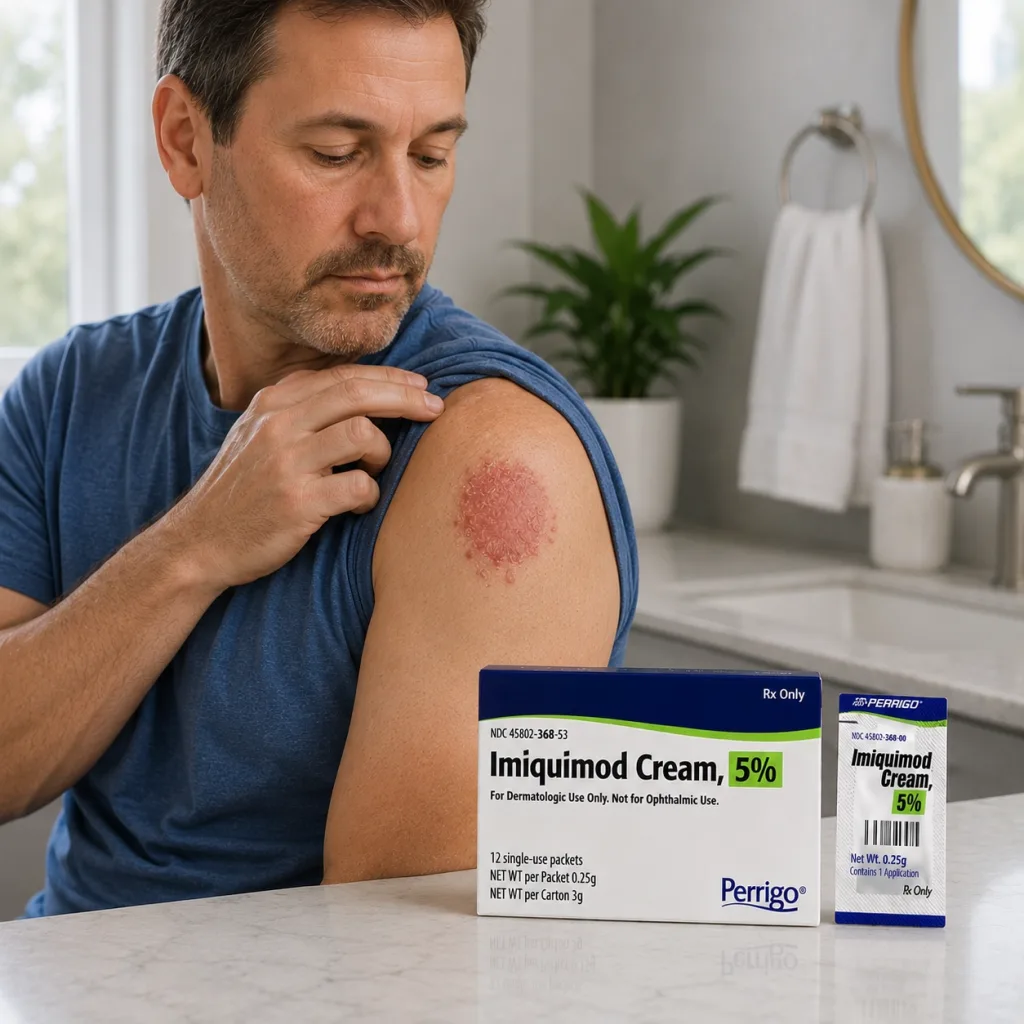
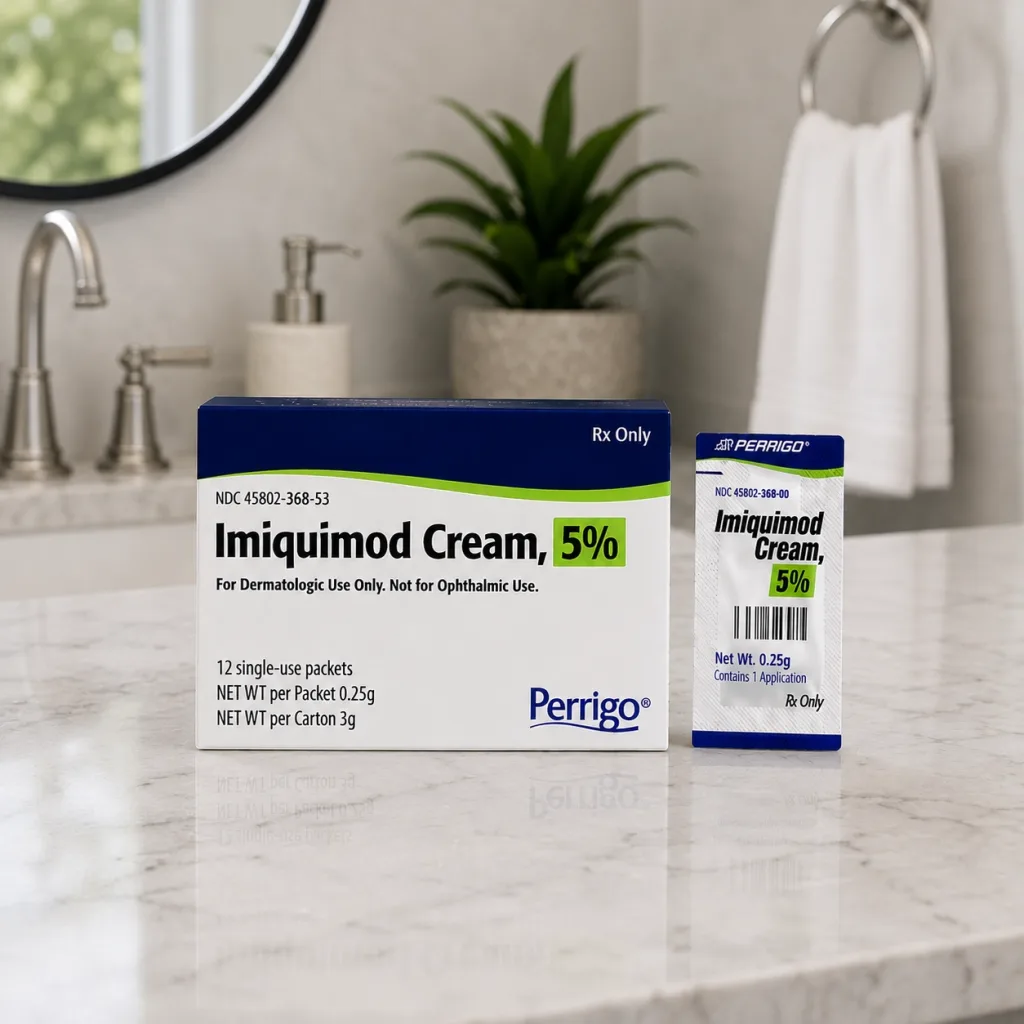
Commonly treated with Imiquimod 5% Cream
Medication as Low as $55.00


How It Works
- Step 1Choose TreatmentSelect your treatment and quantity.
- Step 2Complete Health QuestionsAnswer a brief medical intake.
- Step 3Provider ReviewA licensed provider reviews your information.
- Step 4Pharmacy ShipsIf approved, your prescription is filled and shipped.
What patients say
“So far very easy to use and good explanation”
“I LOVE being able to order online prescriptions as needed.”
“I have used All Family Health many times and have never been disappointed. They offer great service and great products.”
“Professional and secure. Safe and efficient process. Thank you!”
“Great Pricing and a great product”
“My order was very easy. Thank you.”
“Very easy to navigate the site”
“Prompt, professional organization.”
“Everything was so simple to do,I can't not be more happy with your business 😁”
“I'm happy I was able to get what I was looking for”
Your Treatment Option
+ $30 provider review & $10 shipping only charged if approved
- Only charged if a provider approves your prescription
- Estimated delivery: Thu–Fri, Oct 22–23
See price breakdown
Refills at provider discretion.
How It Works
- Step 1Choose TreatmentSelect your treatment and quantity.
- Step 2Complete Health QuestionsAnswer a brief medical intake.
- Step 3Provider ReviewA licensed provider reviews your information.
- Step 4Pharmacy ShipsIf approved, your prescription is filled and shipped.
Choosing and Using Your Treatment
| Treatment | Choose this if… | How to Take |
|---|---|---|
| Imiquimod 5% Cream | For adults with a small, biopsy-confirmed superficial BCC on the trunk, neck, or limbs when a dermatologist has determined surgery is not needed. | Apply a thin layer to the affected area at bedtime 5 times per week for 6 weeks. |
What is Superficial basal cell carcinoma?
Also called: Basal cell carcinoma, superficial type
Basal cell carcinoma is the most common form of skin cancer in the United States, and the superficial type is one of its main subtypes. Superficial basal cell carcinoma stays confined to the uppermost portion of the skin, which is why it is called "superficial." It usually appears as a flat, scaly, pink or reddish patch, most often on the trunk, shoulders, arms, or legs, though it can occur on the face. It grows slowly and very rarely spreads to other parts of the body, but it can enlarge and damage surrounding tissue if left untreated. Diagnosis requires a skin biopsy examined by a pathologist, which also confirms the subtype. Because it sits so close to the skin surface, superficial BCC can often be treated with topical prescription creams, minor procedures, or surgery, depending on its size and location.
Common symptoms
- A flat, scaly, pink or red patch that grows slowly over time
- A slightly shiny or pearly area with a thin, raised border
- A spot that intermittently crusts, itches, or bleeds with minor friction
- A sore or patch that does not heal within a few weeks
- Most often appears on the trunk, shoulders, arms, or legs
- Superficial basal cell carcinoma on the face can resemble eczema or a dry patch
- Usually painless, which can delay noticing it
Causes & risk factors
- Cumulative ultraviolet (UV) exposure from sunlight over many years
- Indoor tanning bed use, especially starting at a young age
- Fair skin, light hair, and light eye color, which offer less natural UV protection
- A history of sunburns, particularly blistering burns in childhood
- A weakened immune system, including from organ transplant medications
- Prior radiation therapy to the skin
- Older age and a personal or family history of skin cancer
Treatment options for Superficial basal cell carcinoma
Compare the medications offered on this page. Your provider will choose the right one for you based on your answers.
Imiquimod 5% Cream
from $55Topical immune response modifier
- Good choice if
- For adults with a small, biopsy-confirmed superficial BCC on the trunk, neck, or limbs when a dermatologist has determined surgery is not needed.
- How it works
- Works by stimulating the body's local immune response in the skin rather than acting on cells directly.
- Typical dosing
- Apply a thin layer to the affected area at bedtime 5 times per week for 6 weeks.
Prices are for the medication only. Provider review and shipping are shown at checkout.
When to see a doctor in person
Online prescription treatment is appropriate only after a dermatologist has performed a biopsy confirming superficial basal cell carcinoma and has determined that topical therapy is suitable for the lesion's size and location — typically small lesions on the trunk, neck, or limbs. See a doctor in person for any new, changing, or non-healing skin lesion, since diagnosis requires a biopsy that cannot be done online. In-person care is also needed for lesions on the face, ears, hands, feet, or genitals, for large or recurrent lesions, for nodular or more aggressive subtypes, or if a treated area is not improving. Seek prompt medical attention for a rapidly growing lesion, significant bleeding, or signs of infection such as spreading redness, warmth, or fever.
Prevention & self-care
- Apply broad-spectrum sunscreen SPF 30 or higher daily and reapply outdoors
- Avoid tanning beds entirely
- Seek shade during peak UV hours, roughly 10 a.m. to 4 p.m.
- Wear protective clothing, wide-brimmed hats, and UV-blocking sunglasses
- Perform monthly skin self-exams and note any new or changing spots
- See a dermatologist for regular full-body skin checks, especially after a prior skin cancer
- Complete prescribed treatment fully to reduce the chance the lesion grows back
Superficial basal cell carcinoma FAQ
What is superficial basal cell carcinoma?
Superficial basal cell carcinoma is a subtype of basal cell carcinoma, the most common skin cancer. "Superficial" means the cancer cells are confined to the top layer of the skin rather than growing deeper. It typically looks like a slow-growing, scaly pink patch and is considered the least aggressive BCC subtype.
Is superficial basal cell carcinoma serious?
It is a true skin cancer, so it should always be treated, but it is generally the least serious BCC subtype. It grows slowly and almost never spreads to other organs. Left untreated, however, it can enlarge, grow deeper, and become harder to treat, so early diagnosis and treatment matter.
What does superficial basal cell carcinoma look like?
It most often appears as a flat or slightly raised, scaly, pink-to-red patch with a thin, sometimes pearly border. It may crust, itch, or bleed lightly and can be mistaken for eczema, psoriasis, or a dry patch. Only a skin biopsy can confirm the diagnosis, so photos alone are not enough.
How to treat superficial basal cell carcinoma?
Treatment options include surgical excision, curettage and electrodesiccation, Mohs surgery for certain locations, cryotherapy, superficial radiation therapy, and prescription topical creams such as imiquimod or fluorouracil. Topical treatment is generally reserved for small, biopsy-confirmed superficial lesions in low-risk locations. Your dermatologist recommends the option best suited to the lesion's size, depth, and location.
What is worst, superficial or nodular basal cell carcinoma?
Nodular basal cell carcinoma grows deeper into the skin than the superficial type, so it usually requires surgical treatment rather than topical creams. Both subtypes are slow-growing and rarely spread, but superficial BCC is generally considered the lower-risk of the two. Some lesions contain both superficial and nodular components, which affects treatment choice.
Who gets superficial basal cell carcinoma?
It is most common in adults with fair skin, significant lifetime sun exposure, or a history of tanning bed use. Risk increases with age, prior sunburns, a weakened immune system, and a personal or family history of skin cancer. Unlike other BCC subtypes, it often appears on the trunk and limbs, including in relatively younger adults.
How to know if basal cell carcinoma is superficial?
The subtype can only be confirmed by a skin biopsy, in which a small sample of the lesion is examined under a microscope by a pathologist. The biopsy report will state whether the tumor is superficial, nodular, mixed, or another subtype. This distinction is important because it determines which treatments are appropriate.
How to prevent superficial basal cell carcinoma growth?
Prompt treatment is the only reliable way to stop a confirmed lesion from growing — sun protection alone will not make an existing cancer go away. Complete the full prescribed treatment course and attend follow-up visits to confirm the lesion has cleared. Ongoing sun protection and regular skin checks help prevent new lesions.
Superficial vs. Nodular Basal Cell Carcinoma
Basal cell carcinoma has several subtypes, and the two most common are superficial and nodular. Some lesions contain both, sometimes called superficial and nodular type. The subtype, confirmed by biopsy, guides which treatments are appropriate.
| Feature | Superficial BCC | Nodular BCC |
|---|---|---|
| Depth | Confined to the top layer of skin | Grows deeper into the dermis |
| Appearance | Flat, scaly pink or red patch | Pearly, raised bump, often with visible blood vessels |
| Common location | Trunk, shoulders, arms, legs | Face, head, and neck |
| Typical treatment | Topical creams, curettage, or excision | Surgical excision or Mohs surgery |
What About Superficial Radiation Therapy?
Superficial radiation therapy (SRT) is a non-surgical, in-office option that some dermatology practices offer for basal cell carcinoma, particularly for patients who cannot undergo surgery. It delivers low-energy radiation to the skin over multiple sessions and requires in-person treatment; it is not something that can be prescribed or delivered through a pharmacy. Your dermatologist can advise whether SRT, surgery, or a prescription topical cream is the most appropriate choice for your specific lesion.