
Order Upper Respiratory Infection Treatment Online
Commonly treated with Amoxicillin/Clavulanate, Tamiflu & Benzonatate
Medication as Low as $10.00



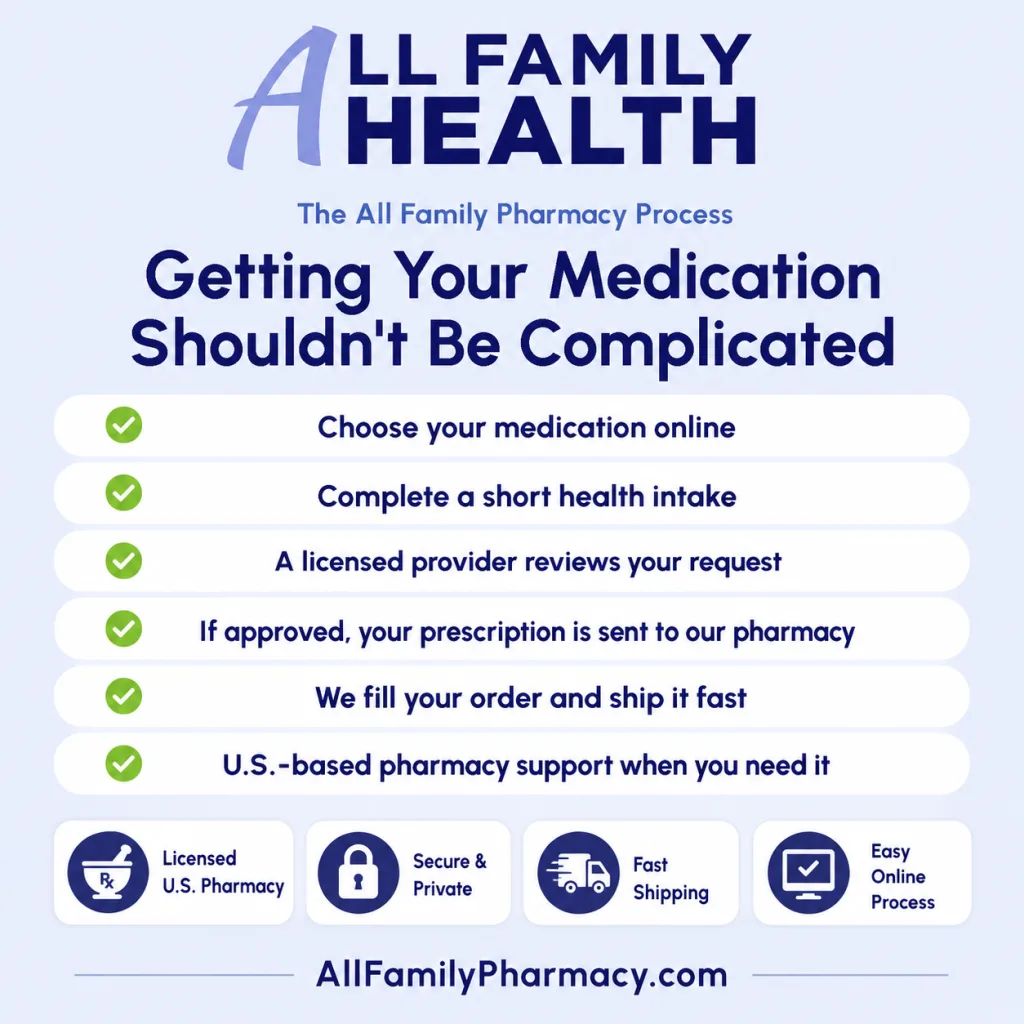
How It Works
- Step 1Choose TreatmentSelect your treatment and quantity.
- Step 2Complete Health QuestionsAnswer a brief medical intake.
- Step 3Provider ReviewA licensed provider reviews your information.
- Step 4Pharmacy ShipsIf approved, your prescription is filled and shipped.
What patients say
“So far very easy to use and good explanation”
“I LOVE being able to order online prescriptions as needed.”
“I have used All Family Health many times and have never been disappointed. They offer great service and great products.”
“Professional and secure. Safe and efficient process. Thank you!”
“Great Pricing and a great product”
“My order was very easy. Thank you.”
“Very easy to navigate the site”
“Prompt, professional organization.”
“Everything was so simple to do,I can't not be more happy with your business 😁”
“I'm happy I was able to get what I was looking for”
- A one-time provider review fee is added once per order, not per medication
- Transparent pricing with no surprise fees
- Packed and shipped in plain, unmarked packaging
- You only pay if a provider approves your order
- Eligible for HSA and FSA
Choose Your Treatment *
+ $30 provider review & $10 shipping
+ $30 provider review & $10 shipping
+ $30 provider review & $10 shipping
+ $30 provider review & $10 shipping
Refill up to 3 times without a new visit — fast processing.
- Medication$25
- Provider review$30
- Shipping$10
- Total$65
Only charged if approved
Need another? Add more above — one $30 review + $10 shipping per order.
✓ In your cart
- Estimated delivery: Mon–Tue, Nov 23–24
See price breakdown
Estimated delivery: Mon–Tue, Nov 23–24
- Step 1Choose TreatmentSelect your treatment and quantity.
- Step 2Complete Health QuestionsAnswer a brief medical intake.
- Step 3Provider ReviewA licensed provider reviews your information.
- Step 4Pharmacy ShipsIf approved, your prescription is filled and shipped.
Choosing and Using Your Treatment
| Treatment | Choose this if… | How to Take |
|---|---|---|
| Amoxicillin and Clavulanate 875mg/125mg | Best if your provider suspects a bacterial infection such as acute bacterial sinusitis. | Take 1 tablet by mouth twice daily for 10 days. |
| Tamiflu 75mgOseltamivir Phosphate 75mg | Best if influenza is suspected and symptoms started within the last 48 hours. | Take 1 capsule by mouth twice daily for 5 days. |
| Benzonatate 200mg Perles | Best for a persistent, bothersome cough that interferes with rest or daily activities. | Take 1 capsule by mouth three times daily for 10 days. |
| Fluticasone Propionate 50mcg Nasal Spray | Best for nasal congestion and sinus pressure, especially with allergy-like symptoms. | Instill 2 sprays into each nostril once daily for 30 days. |
What is Upper Respiratory Infection?
Also called: Upper Respiratory Tract Infection
An upper respiratory infection is an infection of the upper airways — the nose, sinuses, pharynx (throat), and larynx (voice box). It is one of the most common reasons people seek medical care, and most cases are caused by viruses such as rhinoviruses, influenza, and coronaviruses. Typical symptoms include a runny or stuffy nose, sore throat, sneezing, cough, and sometimes a low-grade fever. Most upper respiratory infections resolve within 7 to 10 days with rest, fluids, and supportive therapy. Antibiotics do not help viral infections, but they may be appropriate when a bacterial infection such as strep throat or bacterial sinusitis is suspected. A provider can help determine whether your symptoms point to a viral or bacterial cause and which treatment, if any, is right for you.
Common symptoms
- Runny or stuffy nose (nasal congestion)
- Sore or scratchy throat
- Cough, which may linger after other symptoms improve
- Sneezing and postnasal drip
- Low-grade fever or chills
- Headache or facial pressure
- Fatigue and mild body aches
Causes & risk factors
- Viruses such as rhinovirus, the most common cause of the common cold
- Influenza (flu) viruses, especially during fall and winter
- Other respiratory viruses, including coronaviruses, adenovirus, and RSV
- Bacterial infections in some cases, such as strep throat or bacterial sinusitis
- Breathing in droplets from an infected person's cough or sneeze
- Touching contaminated surfaces and then touching your eyes, nose, or mouth
- Close contact in crowded indoor settings, particularly in colder months
Treatment options for Upper Respiratory Infection
Compare the medications offered on this page. Your provider will choose the right one for you based on your answers.
Penicillin-class antibiotic combination
- Good choice if
- Best if your provider suspects a bacterial infection such as acute bacterial sinusitis.
- Typical dosing
- Take 1 tablet by mouth twice daily for 10 days.
Tamiflu 75mg
from $10Neuraminidase inhibitor antiviral
- Good choice if
- Best if influenza is suspected and symptoms started within the last 48 hours.
- How it works
- Works by blocking an enzyme the influenza virus needs to spread from infected cells to healthy ones.
- Typical dosing
- Take 1 capsule by mouth twice daily for 5 days.
Benzonatate 200mg Perles
from $20Non-narcotic antitussive
- Good choice if
- Best for a persistent, bothersome cough that interferes with rest or daily activities.
- Typical dosing
- Take 1 capsule by mouth three times daily for 10 days.
Intranasal corticosteroid
- Good choice if
- Best for nasal congestion and sinus pressure, especially with allergy-like symptoms.
- How it works
- Works by reducing inflammation in the nasal passages caused by allergens like pollen, dust, and mold.
- Typical dosing
- Instill 2 sprays into each nostril once daily for 30 days.
Prices are for the medication only. Provider review and shipping are shown at checkout.
When to see a doctor in person
Online care works well for most mild to moderate upper respiratory infections — a provider can review your symptoms, recommend supportive therapy, and prescribe medication such as an antibiotic or antiviral when it is genuinely indicated. Seek in-person care if symptoms last longer than 10 days without improvement, a fever persists above 103°F, you have severe facial or ear pain, or symptoms improve and then suddenly worsen. Go to an emergency room or call 911 for difficulty breathing, chest pain, trouble swallowing or drooling, confusion, a stiff neck with high fever, or signs of dehydration. Infants, older adults, pregnant patients, and people with asthma, COPD, or weakened immune systems should have a lower threshold for in-person evaluation.
Prevention & self-care
- Wash your hands often with soap and water for at least 20 seconds
- Avoid touching your eyes, nose, and mouth with unwashed hands
- Avoid close contact with people who are sick, and stay home when you are ill
- Get a flu vaccine every year and stay up to date on recommended vaccines
- Clean and disinfect frequently touched surfaces
- Do not share cups, utensils, or towels with others
- Support your immune system with adequate sleep, hydration, and nutrition
Upper Respiratory Infection FAQ
What is an upper respiratory infection?
An upper respiratory infection is an infection of the nose, sinuses, throat, or voice box. The common cold, flu, sinusitis, pharyngitis, and laryngitis are all types of upper respiratory infections. Most are caused by viruses and get better on their own within one to two weeks.
Is an upper respiratory infection contagious?
Yes. Most upper respiratory infections spread easily through droplets released when an infected person coughs, sneezes, or talks, and by touching contaminated surfaces. People are often most contagious in the first few days of symptoms, so handwashing and staying home while sick help limit spread.
How long does an upper respiratory infection last?
Most upper respiratory infections improve within 7 to 10 days, although a cough can linger for two to three weeks. Symptoms that last longer than 10 days without improvement, or that improve and then worsen again, may signal a bacterial infection and should be evaluated by a provider.
What is the fastest way to get rid of a upper respiratory infection?
There is no instant cure, but rest, fluids, humidified air, and supportive medications can ease symptoms while your body clears the infection. If the flu is caught early, an antiviral like oseltamivir (Tamiflu) may shorten the illness, and antibiotics can help when a bacterial cause is confirmed. A provider can recommend the option best matched to your symptoms.
What is the best antibiotic for upper respiratory infection?
Antibiotics only help when the infection is bacterial — they do not work against colds or other viral infections. When a bacterial cause such as sinusitis or strep throat is suspected, amoxicillin or amoxicillin/clavulanate is commonly considered first-line in the U.S. Your provider will decide whether an antibiotic is appropriate based on your symptoms and history.
Is bronchitis an upper respiratory infection?
No. Bronchitis affects the bronchial tubes in the chest, so it is classified as a lower respiratory infection. However, acute bronchitis often develops after an upper respiratory infection spreads downward, and both are usually viral.
What is the ICD-10 code for upper respiratory infection?
The ICD-10 code most often used for an acute upper respiratory infection of unspecified site is J06.9. More specific codes exist for conditions like acute sinusitis (J01) and acute pharyngitis (J02). Coding is handled by your provider or clinic, not something patients need to supply.
Viral vs. Bacterial: Why It Matters
The large majority of upper respiratory infections are viral, which means antibiotics will not help them and can cause side effects without benefit. Supportive therapy — rest, fluids, humidified air, and symptom-relief medications — is the foundation of care for viral URIs. Antibiotics are reserved for likely bacterial cases, such as strep throat confirmed by testing or sinus symptoms that persist beyond 10 days or worsen after initial improvement.
| Feature | More likely viral | More likely bacterial |
|---|---|---|
| Duration | Improves within 7–10 days | Lasts more than 10 days without improvement |
| Pattern | Gradual, steady improvement | Improves, then suddenly worsens |
| Fever | Low-grade or absent | High or persistent fever with facial pain |
What Recovery Usually Looks Like
Symptoms typically peak around days 2 to 4 and then gradually fade. A dry cough and mild fatigue can linger for two to three weeks even after you otherwise feel well — this is common and usually not a sign of a new infection. If symptoms return with fever, worsening facial pressure, or ear pain, contact a provider for re-evaluation.